
Introduction
What was still an abstract idea in your mind yesterday is now a tangible prototype on your desk. Additive manufacturing, better known as 3D printing, has rapidly evolved into an indispensable link in our engineering process.
By placing a 3D print garden literally next to the CAD workstation with SOLIDWORKS, a direct connection is created between design and realization. There is no need to wait for an external production process: while you go home, the printer continues building your idea. The next morning, the tangible result is ready: a functional validation that immediately shows whether your design is technically sound or requires adjustment.
At MechDes Engineering, we have been making intensive use of 3D printing technology for several years as a tool for design validation, functional testing, and the production of small series. Not as a gimmick, but as an integral part of our engineering process.
Feedback within 24 hours with additive manufacturing
3D printing helps to gain insight into complex challenges more quickly. It makes it possible to test an idea rapidly, to physically assess a design, or to stand together with colleagues around a printed model and discuss it based on something tangible. This accelerates not only the thinking process, but also decision-making.
Because we have intelligently integrated additive manufacturing into our way of working, we can iterate quickly without compromising quality or safety. It helps us shorten development time and respond more flexibly to changing insights. For us, this is not a vision of the future, but daily practice.
"I come back to work in the morning full of enthusiasm to walk straight to the 3D printers and see my ideas realized."
Especially in our innovative engineering projects, where quick action is required, this offers enormous advantages. Additive manufacturing accelerates innovation by enabling prototypes to be adjusted and revised within 24 hours, surpassing traditional production methods. It allows us to experiment, print, and reassess on a daily basis. Best of all, it fuels the idea engine of Ernst and his fellow engineers every single day.
The evolution: from Proof of Concept to a fully developed print garden
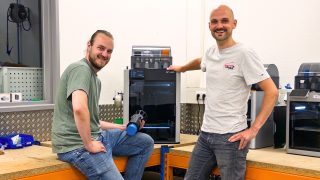
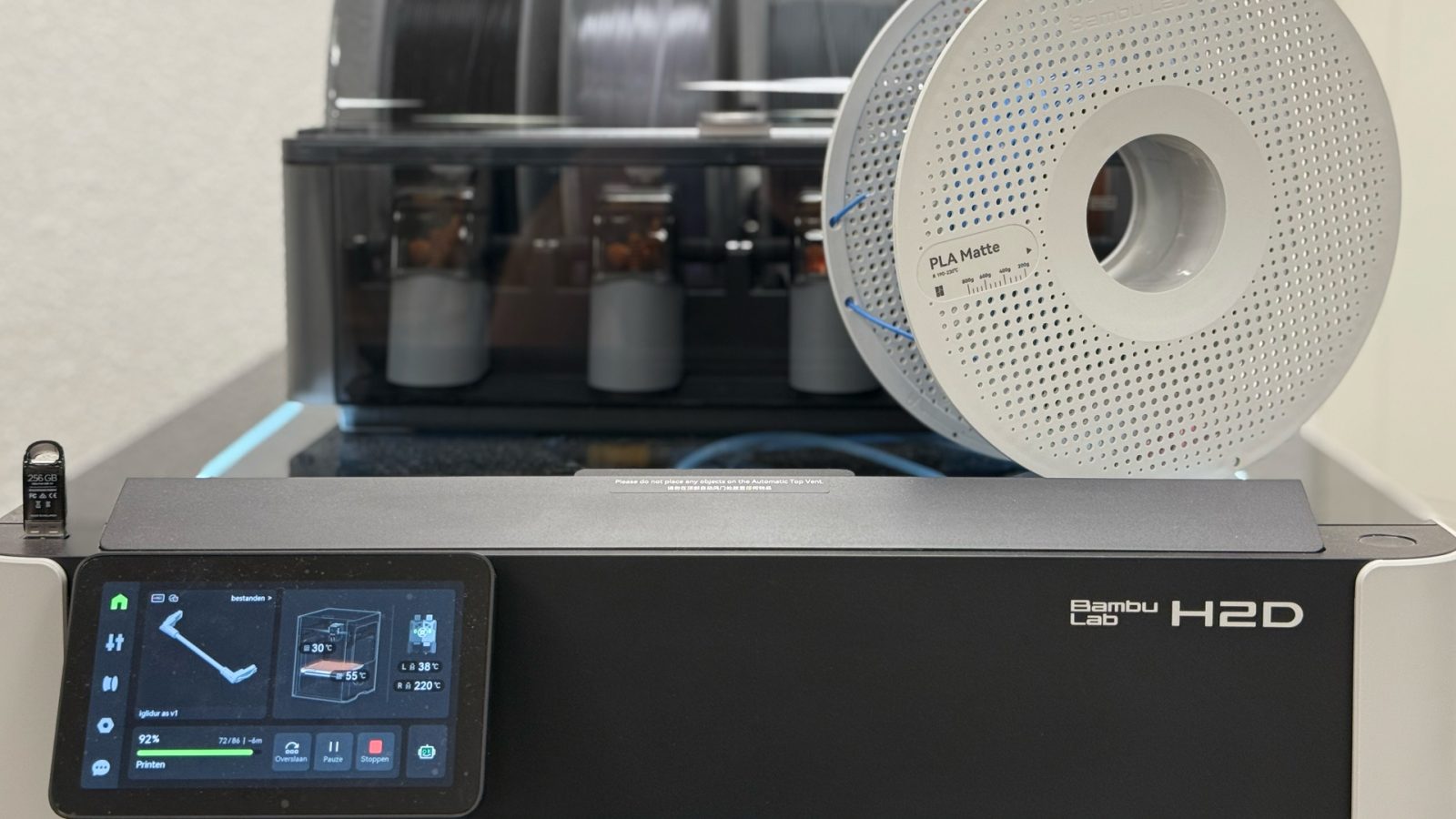
Since the first experiments, 3D printing at MechDes has evolved over the years from an R&D tool into an integrated part of our engineering approach. We now have our own print garden with four high-end printers from Bambu Lab that contribute to projects on a daily basis.
Where years ago we still asked ourselves, "Is this model mature enough to print?" or "Does it actually add value?", that doubt has now completely disappeared. By doing, sharing, and pioneering together with colleagues — with Tijmen having grown into a true 3D printing evangelist — printing has become a natural part of our process. For example, we address Design for Assembly issues even before the first machine goes into production, thanks to fully printed prototypes that allow us to validate in a focused manner.
"Working with a 3D printer is like receiving a gift every day. The reward is the validation of whether you are on the right track or not."
It goes beyond form and fit alone: we also use prototypes to test functional properties and to gain control over complex 3D puzzles. Think of printed parts for tooling, protective covers, or even customer components in small series. Because the entry level of printing technology has significantly decreased, more and more engineers can work independently, regardless of their prior 3D printing knowledge.
Case example: 3D-printed gears for series production
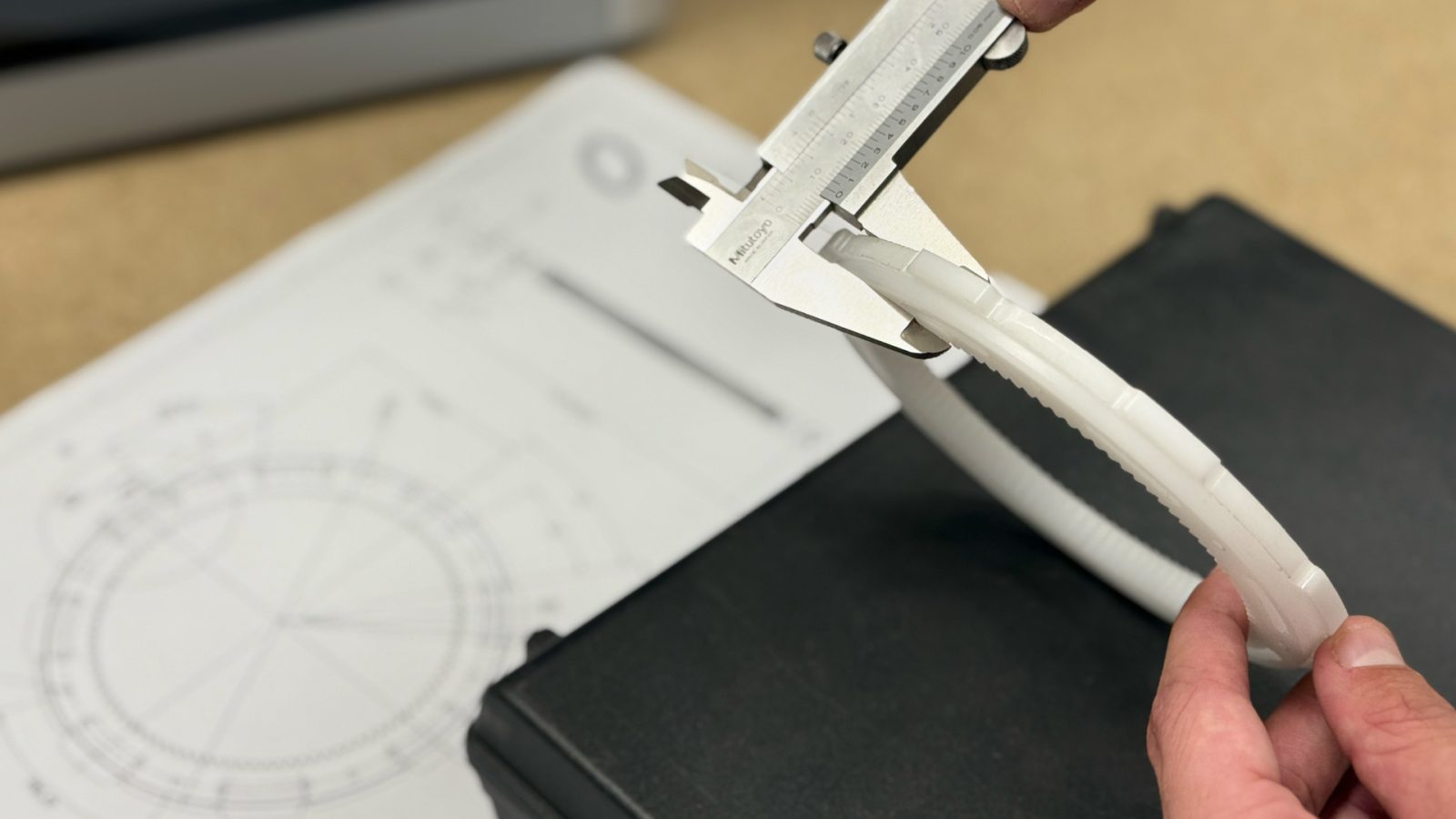
In a recent project, we deliberately chose plastic gears during the design phase. This choice was technically well justified: plastic reduces noise, is significantly lighter than metal, and has the additional advantage that no lubrication is required, which reduces maintenance and simplifies the design.
A standard off-the-shelf gear did not meet our requirements. The transmitted power of the drive played an important role in this. In addition, the combination of dimensions, geometry, and materials we required was simply not available as a standard purchase part. Instead of compromising the design, we chose to maintain control ourselves and switched to 3D printing with PLA.
Within a very short time, we printed a functional prototype that allowed us to physically validate the design for:
- bending stress
- contact stress
- gear geometry
- behavior under load
Thanks to this rapid feedback, we were able to implement the final optimizations immediately. Through the combination of design freedom, speed, and reliability, additive manufacturing once again proved to be a true accelerator: not only in the development phase, but also in the transition to series production.
"Thanks to rapid validation and direct iteration, we delivered a printed gear in a short time that met all technical requirements — and was ready for series production."
The end result? A fully functional gear, printed in a small series, that met all technical specifications and was successfully implemented in the final product.
Smart material choices, with an eye for safety
Thanks to our many years of experience with FEM analyses using Ansys, we know that over-engineering is rarely the best solution. Less is more, and sustainable, well-considered design is deeply embedded in our DNA. We apply that same principle to the material choices we make for prototyping.
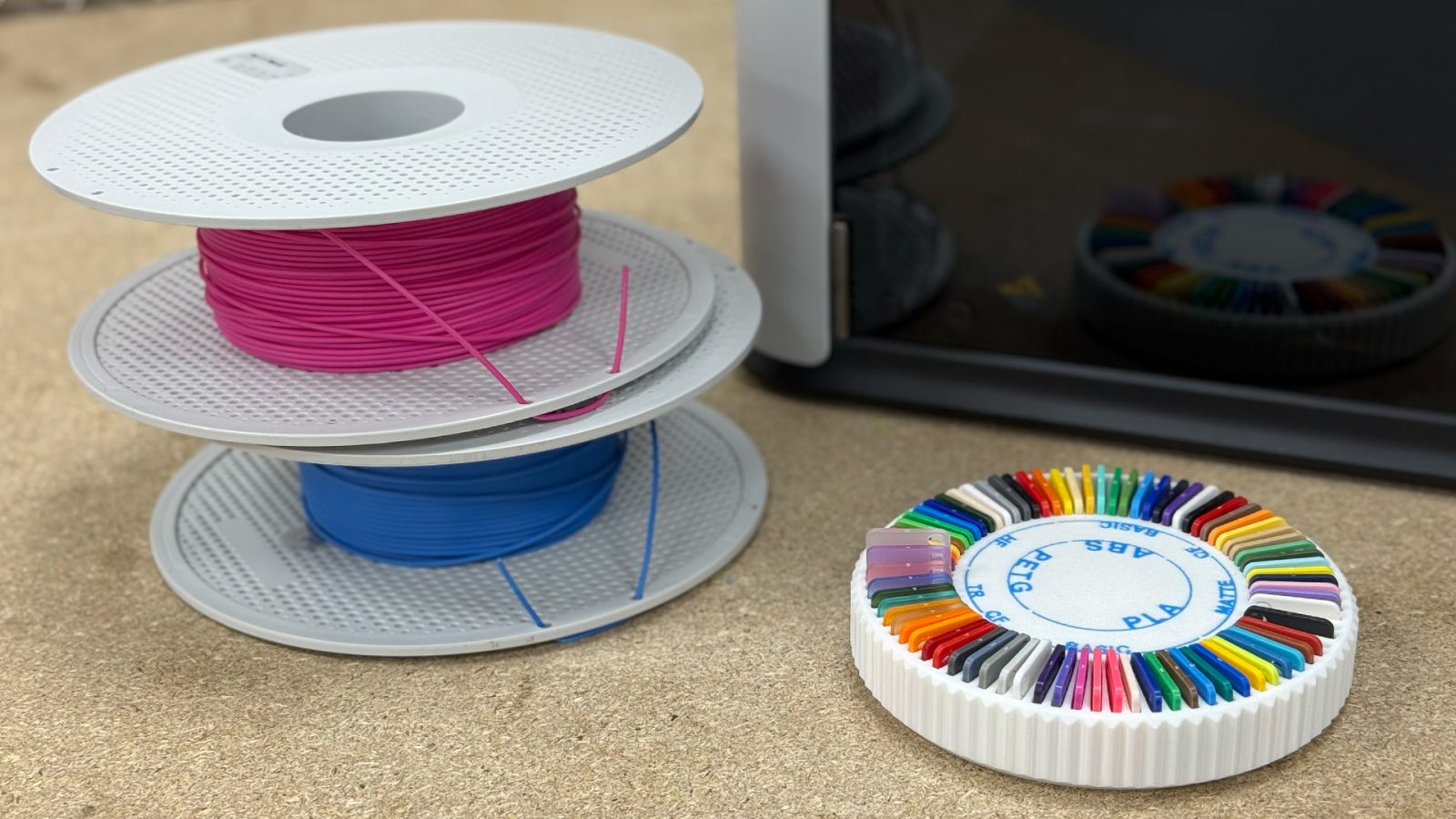
Although the world of 3D materials continues to expand, at MechDes we have deliberately chosen PLA as our standard material. This choice is based on strength, quality, reliability, reproducibility, and the safety of our employees.
Materials such as PLA-CF (carbon fiber reinforced PLA) or PLA with additives such as copper or bronze powder can release harmful particles or fumes during printing, particularly with insufficient ventilation. In that respect, standard PLA is a conscious and safe choice, without compromising functional applicability for the vast majority of our prototyping applications.
Fortunately, material development does not stand still. Consider multi-material prints, functional gradations within a component, or printed structures that intelligently influence mechanical behavior, for example flexible in one direction and stiff in another. Combined with software development, this enables designs that would have been unthinkable with traditional production methods.
We closely monitor these developments and are ready to experiment with them as soon as they are safe and demonstrably add value to our engineering challenges.
For example, our 3D printing evangelist Tijmen will participate from September in the Test Before Invest program at Perron038 in Zwolle, supported by the Plastics Technology research group at Windesheim. Tijmen leads the 3D metal printing track and is working on the redesign of an End Of Arm Tool: an integrated robot component in which mechanical movement, pneumatics, and electronics are closely coordinated.
A great next step in our exploration within additive manufacturing. To be continued.
Future: designing with the logic of tomorrow
We do not see additive manufacturing as an endpoint, but as a stepping stone toward a new era in engineering. While the focus today is often still on prototyping, the technology opens doors to functional end products, small series, and even customer-specific mass production. However, the real acceleration comes from software.
Developments in the field of Computational Design (nTop, LEAP 71), parametric design, and topology optimization will fundamentally change the work of engineers. These tools make it possible to automatically generate and optimize designs, tailored to specific strength requirements, loads, and printing possibilities. Where previously an engineer would draw a shape and then test whether it was manufacturable, the design will soon start from the function, with the form following automatically, generated by algorithms.
"It will become increasingly normal for engineers not only to design for manufacturability, but directly for printability — receiving almost real-time feedback on their design."
This shift also requires a different mindset. Engineers are increasingly becoming system thinkers who see design, simulation, and production not as separate steps, but as one continuous iterative process. Through links with printing software and simulation modules, it will soon be possible to gain real-time insight into the impact of a design choice on weight, strength, print time, or cost.
About MechDes Engineering
At MechDes Engineering, we translate complex technical challenges into tailored solutions with a team of 100 engineers through advanced engineering. We work together based on craftsmanship and thorough expertise to realize our clients’ vision.
We believe in technology that brings thinking and doing closer together. Prototypes are not an end in themselves, but a means to achieve better products more quickly. That is why we continuously invest in knowledge, technology, and collaboration.
For us, additive manufacturing is therefore not a standalone tool, but an integral part of our vision: We engineer your vision with the tools of tomorrow and the curiosity of today.