
Introduction
Anyone using a lock, weir, or movable bridge today rarely thinks about the mechanical systems behind it. That makes sense. If it works, it works. Still, there is something remarkable about it. In the Netherlands, we use infrastructure every day whose foundations were laid more than a hundred years ago.
What I find particularly interesting is that despite all the maintenance and modernization over the years, the structural core has remained the same and continues to function. That core was designed exceptionally well from the start.
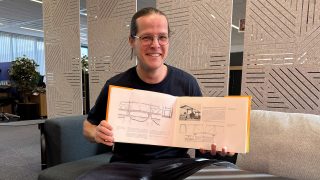
Once you start looking into these kinds of structures, your perspective changes. You no longer just see steel, gears, shafts, or drive systems, but also the logic of the engineer who originally designed it. Without 3D CAD, FEM, or digital simulations. Just technical insight, experience, empirically built knowledge, generous safety margins, and pencil, ruler, and paper. I have great respect for that.
At the same time, we are now facing a major maintenance and renovation challenge in water infrastructure. Rijkswaterstaat has significant work ahead in the coming years on weirs, locks, and other moving structures. Not because everything has reached the end of its lifespan, but because reliability, safety, and availability must be maintained under increasing usage and higher loads. It always starts with the same question: what is actually there? A simple question, but rarely a simple answer.
At MechDes, we work on behalf of Mourik Infra for Rijkswaterstaat on various projects within this challenge. In one of these projects, we are systematically mapping dozens of moving structures. This preliminary work shows how important it is to understand what is there, how the system is interconnected, and where the real points of attention lie. Not relying on assumptions or outdated lists, but reading the system itself. That is where every well-founded decision begins.
Old technology is straightforward, but rarely simple
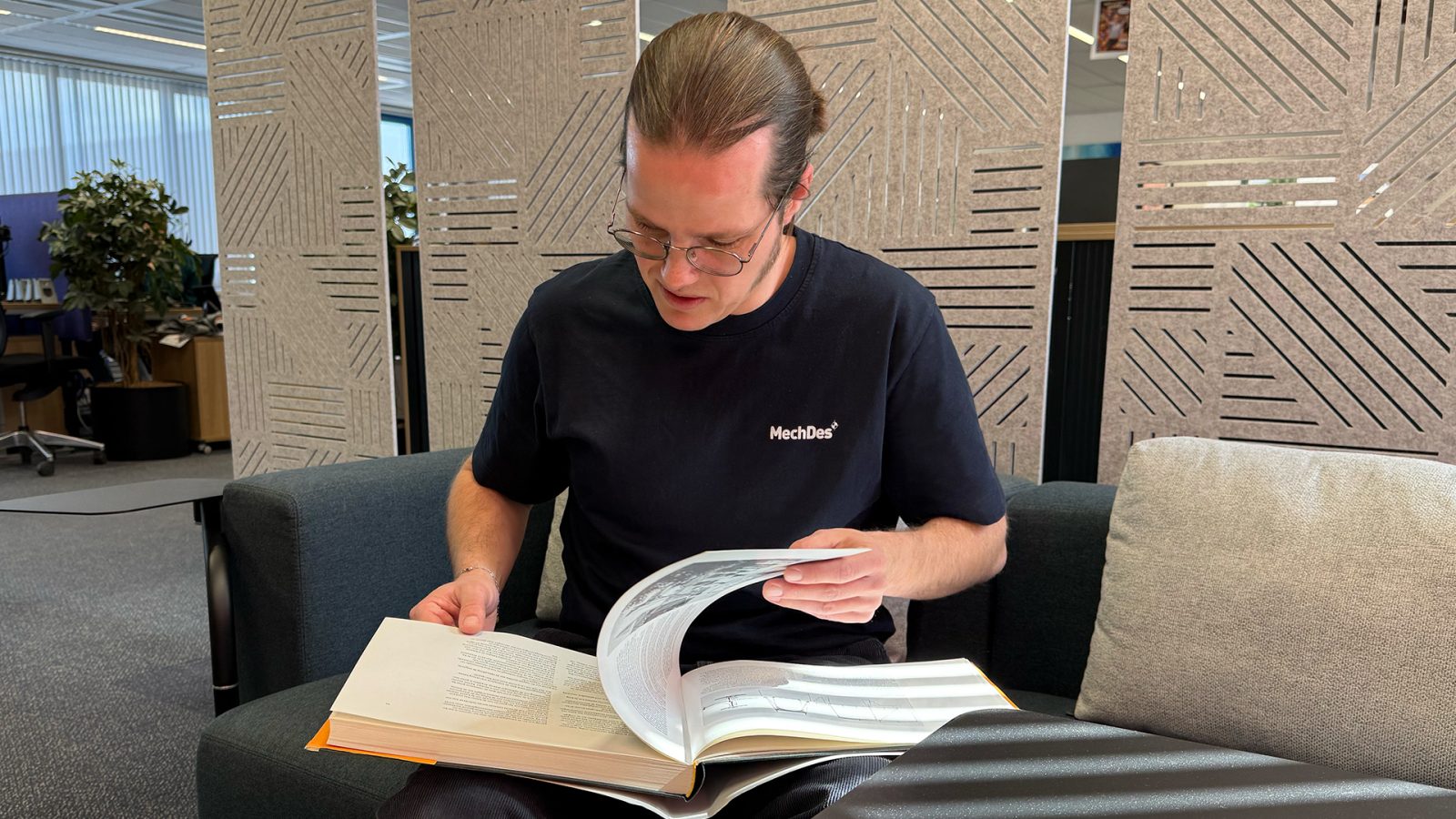
Most of the original waterworks we are currently studying date roughly from the period between 1900 and 1930. In a relatively short time, an enormous amount was built: bridges, locks, weirs, and moving structures. Seeing how many are still standing and functioning today, you can only conclude that they were designed with great care and thoroughness.
These designs were not minimalistic, but solid and robust. Not optimized down to the last gram, but built to perform reliably and endure over time. This is also reflected in how drawings were made and construction was carried out. A drawing was less of a fully detailed production file than it is today. It was more of a construction instruction. Nodes, plates, profiles, and main dimensions were specified, but much was determined during the actual build. Tolerances were not explicitly defined, but attention points were indicated for those executing the work. The knowledge and experience required to realize the designs were therefore deeply embedded in the production process itself.
Today, we design as completely as possible in advance: like a prefab kit, where everything is prepared and fits before production begins. This has many advantages, especially since preservation is now preferably done under controlled conditions and on-site rework is minimized. But it also highlights how significant craftsmanship used to be in execution.
Generations of technology in a single structure
What makes working on water infrastructure particularly interesting is that you almost never deal with just one time layer. A structure is rarely exactly as it was originally designed. In fact, you usually encounter multiple generations of technology within a single moving structure.
A structural base from the early twentieth century, later supplemented with mechanical modifications, electrification, and modern automation. Everything is integrated into one system. This makes it technically fascinating, but also complex. What is original? What was added later? What has been replaced one-to-one? And what has been modified along the way without being fully documented?
This is precisely where the value of systematic mapping lies. We examine each machine, each moving structure, across the entire chain from motor to driven component. Not just an isolated bearing housing or gearbox, but the complete mechanical line. How do the components interact, and where are the critical points? Which components fall within the project scope, and which actually deserve attention as well?
This approach is important because otherwise it is easy to miss the essence. You might end up with a list stating that "a gear" has been replaced somewhere, while the system may contain four. You still don’t know what you are looking at. Our goal is to make it clear and traceable, so that for each component you understand what it is, where it is located, and what its condition is.
From archive to reality
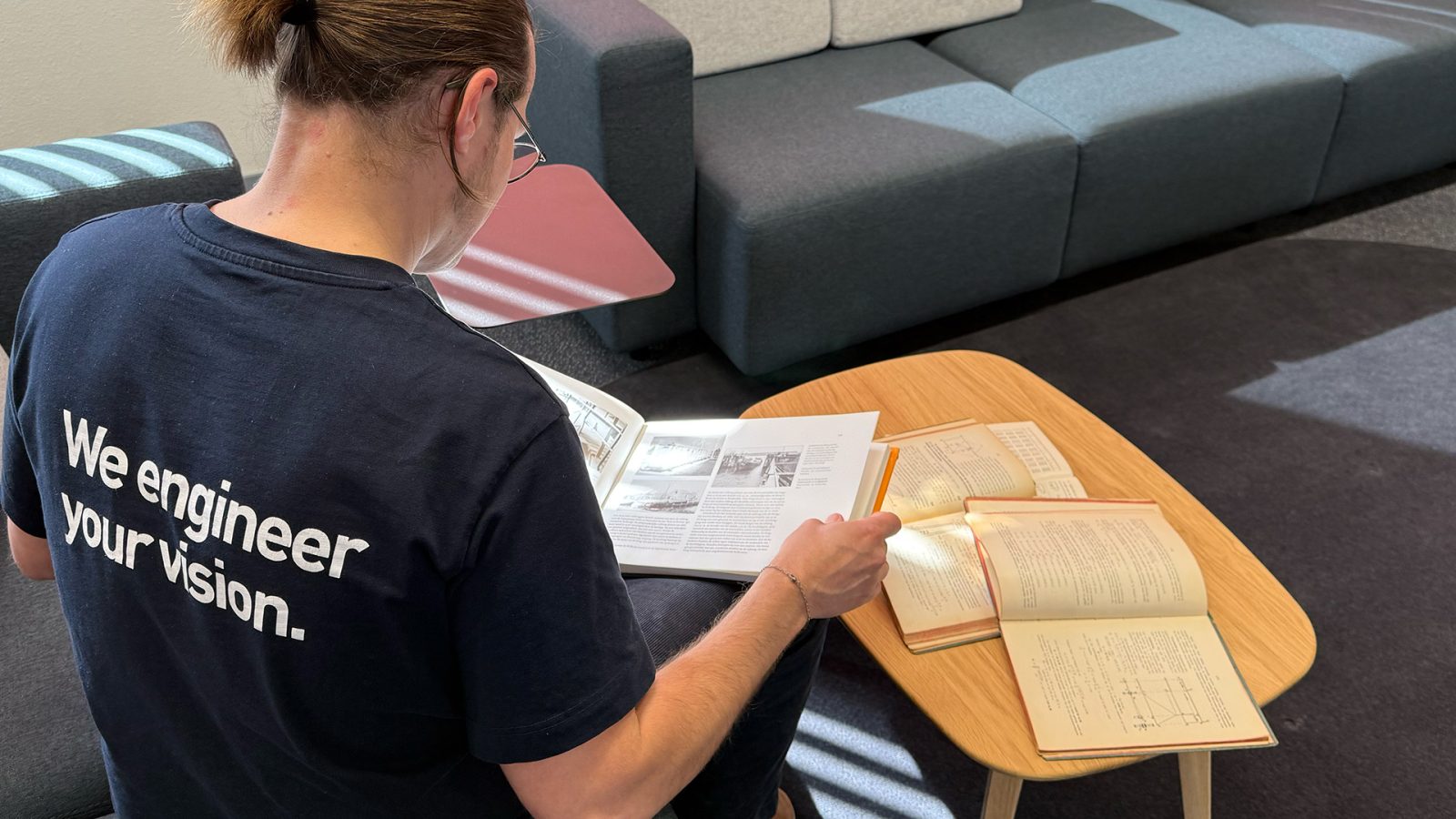
A large part of the work begins upfront with analyzing available data, the desk study. Rijkswaterstaat has extensive digital archives containing old drawings, revisions, specifications, and other project information. There is a wealth of knowledge stored there. However, archive and reality are not always the same.
Once you are on site, you almost always encounter deviations. Sometimes minor, sometimes significant. This is not surprising; it is inherent to structures that have been in use for so long. They evolve through use, maintenance, failures, optimizations, and changing requirements. That is exactly why you cannot rely on drawings alone. You need to see it, trace it, open it, compare it, and truly understand it.
In the project I am currently working on, where we are supporting Mourik Infra for Rijkswaterstaat in the Tilburg region, we have deliberately developed a scalable methodology. Every moving structure is different, but you want to assess them using the same line of reasoning and principles. This ensures you do not end up with a collection of separate stories, but with a consistent approach that produces comparable and usable results.
That is also what motivates me: not only looking at the technical content, but also establishing a process that allows this work to be carried out effectively, efficiently, and consistently.
Lock 15 and the 20-kilogram operator
A great example of why this work is so interesting can be found at Lock 15. There, we fully analyzed a complex moving structure as a pilot. Such an object is almost a "Frankenstein" from a technical perspective, with components from different periods and numerous modifications over time. That complexity made it ideal for testing our approach.
What stood out to me was how you can reason back through drawings and system chronology to the original design concept. At the downstream head, there are segment gates in the water, mechanically driven by an underground balance system, now equipped with an electric motor and transmission. When you investigate the basis of its dimensioning, you arrive at something almost disarmingly simple: a person applying twenty kilograms of force to a lever.
That is the foundation. From that human load, the entire mechanical system was derived and designed. Everything the installation can do today ultimately traces back to that single principle. No black box, no excessive software, but a tangible physical starting point. Components that still function well are retained. I find it fascinating that these old mechanisms are still in place, now driven by modern motors. It is a testament to the solid engineering of another era.
Modern tools provide control, but do not replace insight
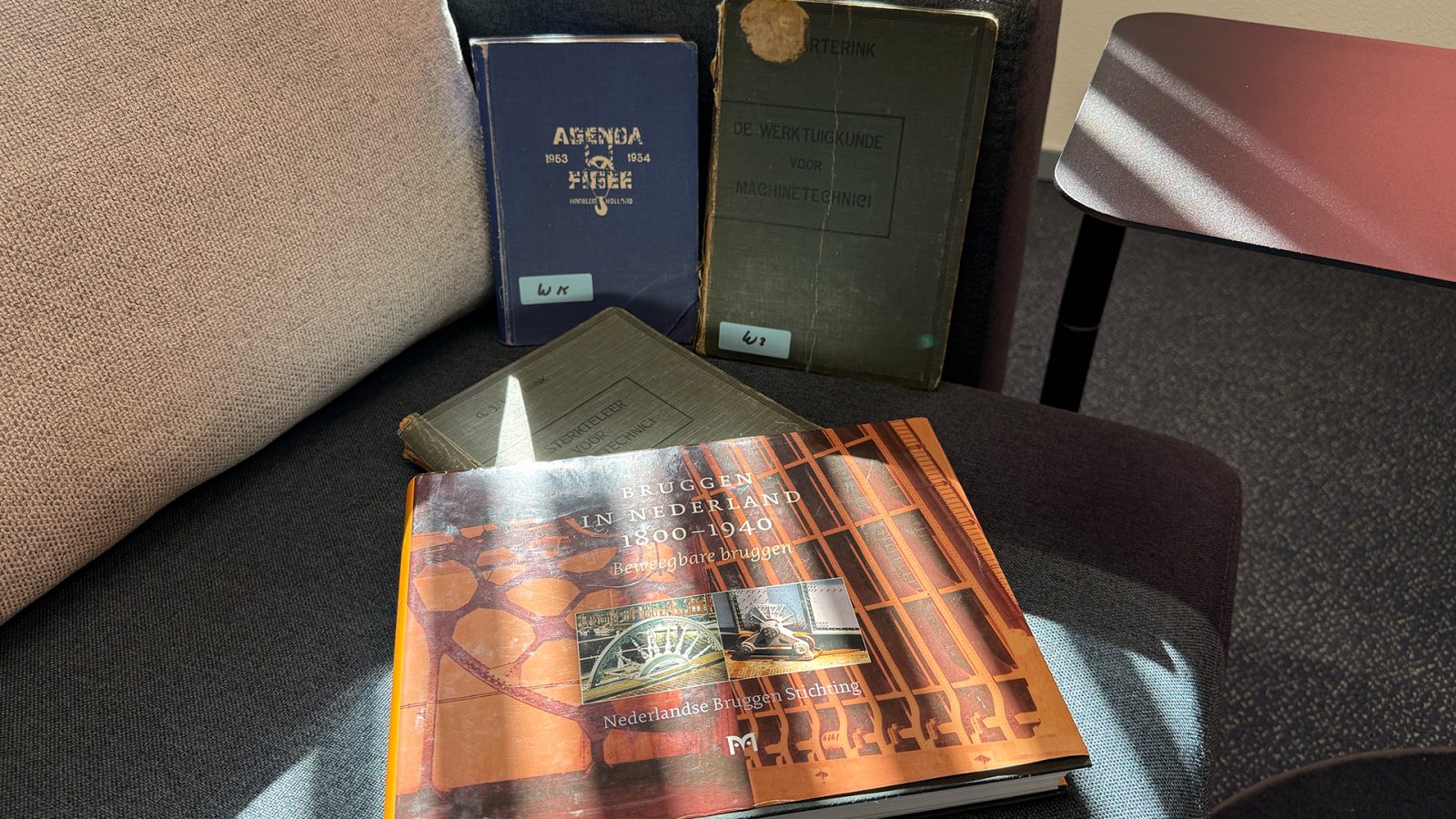
Of course, we design very differently today. We now have 3D CAD, FEM, digital archives, calculation tools, and far more extensive standards. This allows us to predict much more accurately what will happen when something is modified or replaced. That is extremely valuable.
In previous projects, such as Weir Grave commissioned by CMD (Combinatie Mourik-SWARCO) and Project GRONST (Major Maintenance of Weirs) for Rijkswaterstaat, we have fully applied these tools. For example, reconstructing an old structure entirely in 3D to determine the weight of a bridge section or frame. This provides control: loads become clearer, solutions can be better substantiated, and service life can be estimated more accurately.
At the weir in Grave, I contributed to the concept engineering of the complex. Based on the main function and boundary conditions, we had to develop a solution enabling twenty frames to be placed or removed within ten hours using a single crane and a crew of three. That comes down to making the right choices in structure, drive systems, and interfaces. These are the projects I enjoy most, because you move from concept to something tangible. It is rewarding to see afterward that a design you contributed to performs well.
However advanced our tools may be, they do not replace the most important part of the work: understanding how a system functions. The analytical capability of engineers in the past was remarkable and should not be underestimated. Without simulations, they were often able to pinpoint critical points and handle them effectively. Today, we can calculate and verify more precisely, but the essence of the profession remains the same.
Replacing is not always improving
An important lesson in renovation projects is that newer is not automatically better, especially when replacing only a single component within an existing system.
This may seem counterintuitive, as modern standards often lead to the assumption that everything should be recalculated and made heavier. However, if only the motor is replaced and selected based on current standards and guidelines, it may overload the rest of the system.
Therefore, when replacing a component within an existing moving structure, it is often wise to align with what was originally installed, provided it has been confirmed to still be functional and appropriate. Only when renewing the entire system do you redesign it integrally according to current standards and requirements.
This system thinking is crucial. Not focusing on a single component, but ensuring the entire system continues to function reliably.
What old structures still teach us
What makes this work so enjoyable for me personally is that it brings together multiple aspects. You work with old technology, current challenges, analysis, site visits, historical drawings, modern design software, and sometimes very concrete new solutions.
I genuinely get energy from it. I enjoy diving into old archives, studying original drawings, and reconstructing the original intent. I find it interesting to verify that against reality on site. And I simply enjoy engineering itself, in the literal sense of bolts, nuts, shafts, connections, and mechanisms. That interest has been there since I was young.
Perhaps that is why these projects suit me so well. Old infrastructure forces you to look beyond standards or calculation tools. You need to develop a sense for what you are dealing with and reconstruct how it was originally designed. What was the idea? Why is it built this way? What is clever, what is pragmatic, what is outdated, and what is surprisingly strong?
That makes the work rich in content, and I appreciate contributing to something with direct societal value: keeping tens of thousands of people safe from flooding.
The value of looking carefully first
For me, mapping historical moving structures is not an administrative preliminary step. It is the foundation for everything that follows. If you do not clearly understand how a system is actually constructed, you cannot make sound decisions about maintenance, renovation, or replacement.
Especially in a time when significant work is required on water infrastructure, this is crucial. The Netherlands does not have a collection of obsolete structures. It has a technical landscape built, adapted, and developed over generations. That requires careful handling, starting with thorough observation, analysis, and understanding.
In a time when AI is increasingly taking over human thinking, I see this work as a valuable exercise in maintaining analytical reasoning. From rules of thumb and rivets to FEM analyses and 3D CAD, the tools have changed. The core of the profession has not.
About MechDes Engineering
MechDes Engineering is a mechanical engineering firm based in Harderwijk with more than 30 years of experience in designing, analyzing, and improving complex technical systems. We work on a wide range of projects in sectors such as infrastructure, offshore, and lifting & handling, always combining technical insight, thoroughness, and commitment. Whether it concerns new solutions or carefully mapping existing moving structures, MechDes focuses on well-considered engineering delivered right the first time and designed to perform reliably for years to come.