Introduction
Maintaining hydraulic structures such as weirs, pumping stations, and locks is a complex task. Many of these assets are nearly one hundred years old and have protected heritage status, meaning that not only technical execution but also preservation of their historical character is central. At the same time, today’s standards apply: safe working conditions, sustainability, reliable performance, and efficient maintenance. Combining these elements requires well-considered engineering and close collaboration between the client, contractor, and specialist partners.
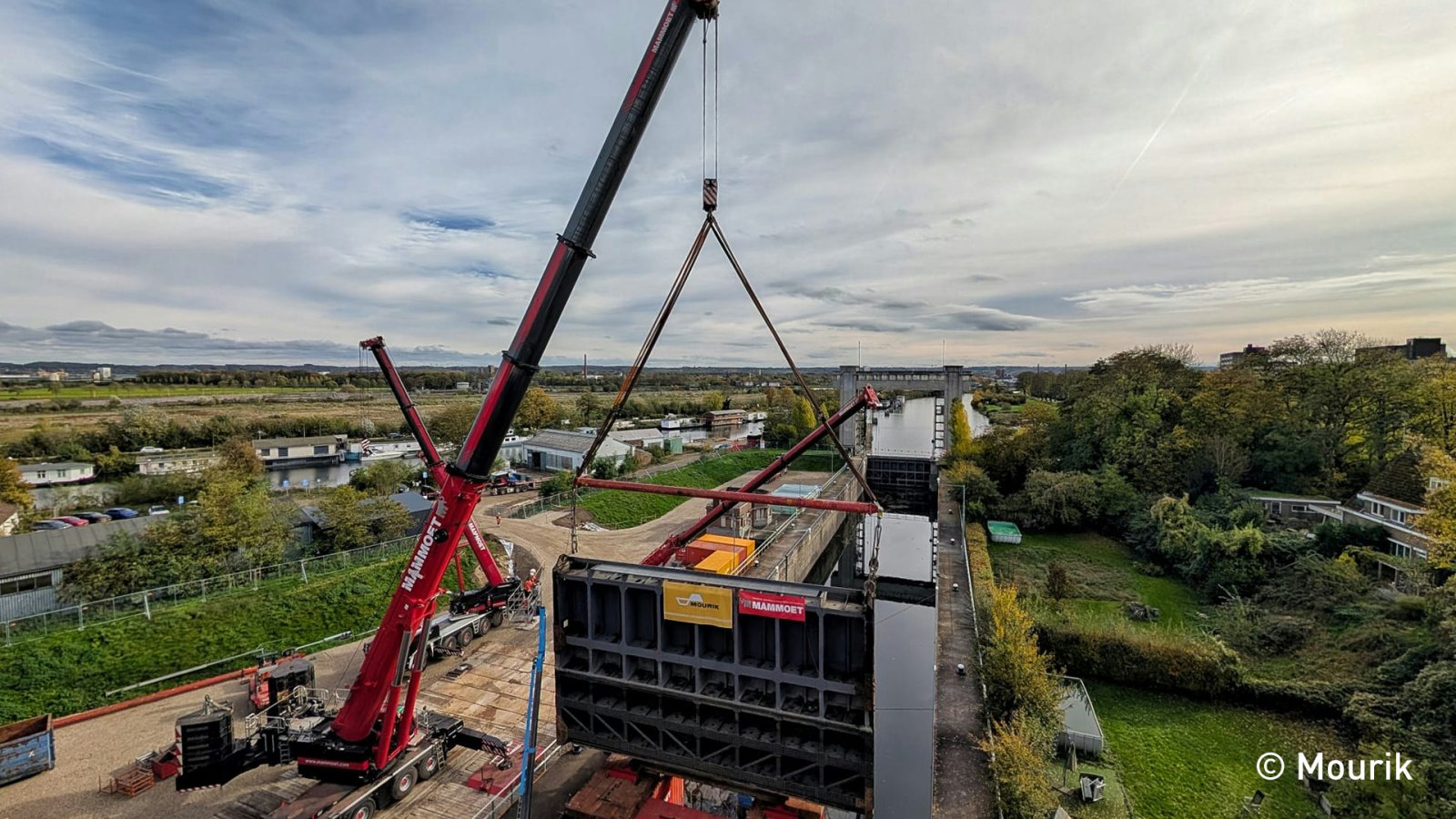
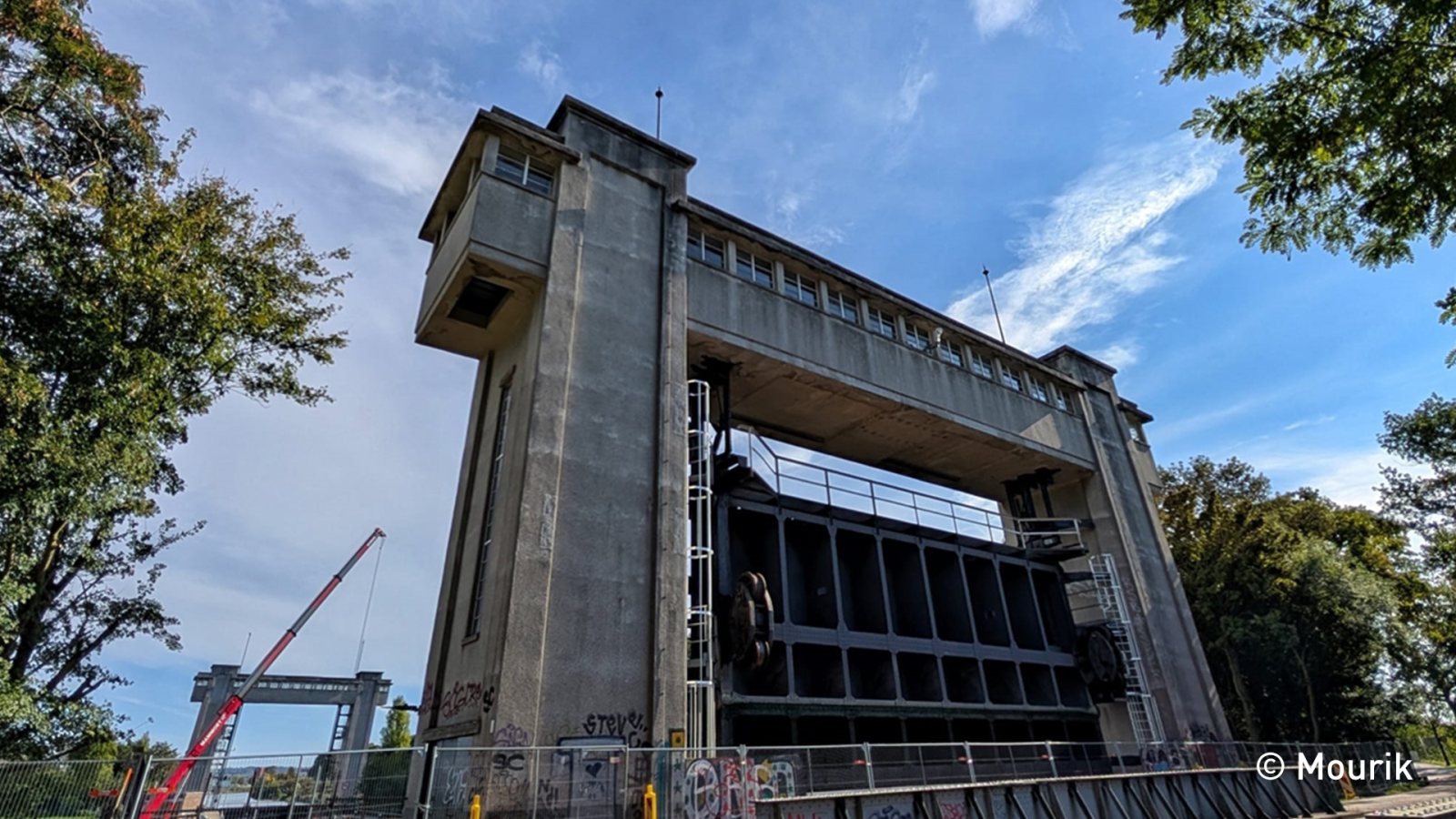
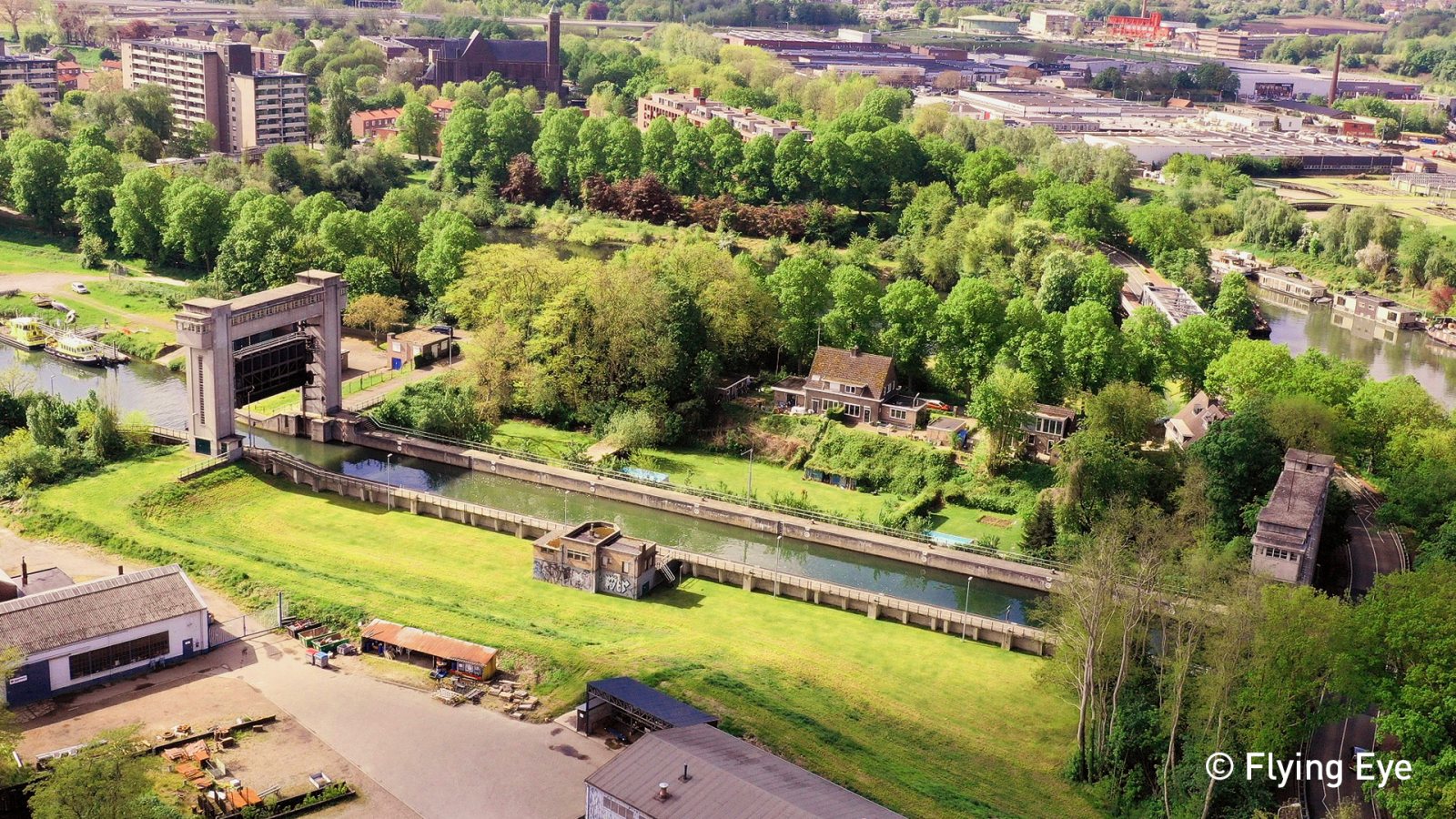
Bosscheveld Lock is an illustrative example of how this works in practice. Rijkswaterstaat commissioned the contractor combination Mourik-SWARCO (CMD) to replace and renew the drive and control systems and to carry out life-extension maintenance (LVO) on the lock. MechDes Engineering provided the specialized mechanical engineering services on behalf of Mourik Infra. Together, they form a close partnership in which knowledge and experience are combined to deliver solutions for mechanical engineering challenges that are both practical and future-proof.
The triangle of collaboration
One of the key success factors in projects such as Bosscheveld Lock is the early involvement of all parties. By working together from the outset, design choices and maintenance strategies can be better aligned. Co-creation is central: each party contributes input, shares expertise, and actively thinks along about possible solutions.
The benefits of this approach are clear. Issues and bottlenecks are identified and discussed at an early stage, enabling faster decisions with broader support. At Bosscheveld Lock, for example, Rijkswaterstaat required the drive system to be split from one central motor into two separate units. This solution increases reliability, improves maintenance safety, and aligns more closely with other assets in the region, such as the locks at St. Andries, Born West, and Lith.
"The expertise of MechDes played a crucial role in developing technical designs that are robust, efficient, and future-proof."
Short communication lines between client, contractor, and engineer are essential. A single point of contact at each organization ensures that information remains clear and complete, preventing misunderstandings and accelerating execution. Combining knowledge and experience results in a shared vision in which safety, sustainability, and efficiency go hand in hand.
Efficient maintenance as a starting point
Completely maintenance-free design does not exist, but efficient maintenance can make a significant difference in terms of cost, safety, and sustainability. Through smart choices in materials, maintenance concepts, and technology, the total lifecycle of a hydraulic structure can be substantially improved.
At Bosscheveld Lock, gears, chains, and drive systems were addressed with long-term maintenance in mind. Investments in durable and robust systems pay off because they are easier to maintain and less prone to failure. This aligns with Rijkswaterstaat’s design philosophy, where safety, reliability, and sustainability are continuously balanced.
MechDes plays a key role in this process. Through technical expertise and experience in mechanical engineering, they contribute to solutions that are both practical and innovative. The aim is to avoid over-engineering and design systems that are simple, robust, and maintenance-friendly. Less complex installations reduce material use and transport requirements while extending the lifespan of the asset. Less is more.
VR sessions: from design to tangible experience
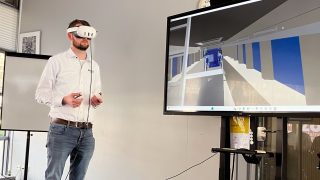
An important innovation at Bosscheveld Lock was the use of VR sessions. With VR headsets, participants could walk through the design in a virtual environment and experience the 3D model up close.
During two VR sessions, all stakeholders were able to explore the design, from operators and technicians to project managers and safety specialists. It provided a concrete understanding of dimensions and the placement of control cabinets, doors, platforms, drive systems, and protective elements, immediately revealing potential bottlenecks.
The value of VR goes beyond visualization. It creates a shared reference point, ensuring that everyone understands how the asset functions and what work will be required. Practical insights emerged during the sessions that might otherwise only have been discovered during execution. For example, accessibility and positioning of lubrication points and how future maintenance or component replacement could be carried out. By identifying these aspects early, solutions could be implemented without physical modifications later.
The VR sessions also strengthened commitment among all involved parties. Everyone could provide input, contribute ideas on safety measures and practical working methods, and collectively refine the design. As a result, misunderstandings were minimized and execution efficiency improved. An additional benefit was reduced paper use and enhanced digital collaboration, contributing positively to sustainability objectives.
Practical experience and lessons learned
The VR sessions demonstrated how valuable practical input from technicians can be. They understand better than anyone how installations perform in daily operation and can identify issues that designers or project managers may not immediately see. This feedback was used to adapt the control system of the drive units and implement redundancy, making execution safer and more practical.
Managing heritage assets also requires attention to long-term planning. Some structures are operated only once a year, yet must function flawlessly when required. If an asset does not operate properly, the impact on the surrounding area and residents is immediate. First-time-right is therefore essential. Efficient maintenance, with a focus on prevention rather than correction, is becoming increasingly important. By developing solutions together with partners that simplify maintenance, Rijkswaterstaat is preparing these assets for the decades ahead.
Innovation in technology and process
In addition to VR and technical engineering, innovation plays a role on multiple fronts. Predictive maintenance software makes it possible to better calculate lifespan and maintenance intervals, enabling more proactive and efficient planning.
Material selection is another critical factor. For historic hydraulic structures, stricter design rules and heritage status can create constraints. However, through smart material choices and innovative maintenance concepts, installations can still be modernized in a sustainable way.
MechDes also fulfills an advisory role in this context. They identify improvement opportunities, contribute ideas for efficient solutions, and apply their expertise to optimize both design and execution. This strengthens collaboration with Mourik-SWARCO and Rijkswaterstaat and ensures that market knowledge is fully utilized.
Collaboration as a success factor
The Bosscheveld Lock project demonstrates that collaboration with partners such as Mourik-SWARCO and MechDes is crucial. By combining the long-standing knowledge and experience of all parties, solutions can be developed that are both innovative and feasible. In these projects, MechDes’s role extends beyond technical engineering. They advise, challenge, and ensure that design choices are practically executable.
This strong collaboration contributes to safe, sustainable, and efficient hydraulic structures. It strengthens not only execution but also future maintenance and asset management. Co-creation and short communication lines ensure optimal use of knowledge and enable faster decisions with broader support.
"In complex projects such as Bosscheveld Lock, collaboration is not a prerequisite but the key to success. By combining the knowledge and experience of Mourik and SWARCO, Rijkswaterstaat, and MechDes, we work from a shared vision in which safety, sustainability, and efficiency come together."
Looking ahead: challenges for the coming decades
Rijkswaterstaat faces a significant maintenance challenge, particularly for heritage hydraulic structures. Safety, efficiency, and sustainability remain crucial. Projects such as Bosscheveld Lock demonstrate that co-creation, smart engineering, and innovations such as VR sessions are essential in managing this challenge.
Key trends include predictive maintenance, sustainable materials, and digitalization. VR and AR, where the virtual world is projected into the real world, offer new ways to make projects transparent for all stakeholders, from engineers to technicians. This accelerates decision-making, increases understanding and commitment, and contributes to safe and efficient maintenance.
The lessons from Bosscheveld are clear: early involvement of specialized engineering partners, digital visualization, and close collaboration with contractors lead to better decisions, faster processes, and future-proof infrastructure. Collaboration, knowledge sharing, and innovative methods make it possible to address the challenges of the coming decades effectively, without compromising the historical character of heritage infrastructure.
Bosscheveld Lock is therefore a strong example of how heritage infrastructure can be maintained efficiently and safely, with maximum reliability, sustainability, and practical feasibility. The project shows that investing in collaboration, technology, and smart engineering pays off in both execution and long-term asset management.
About MechDes Engineering
MechDes Engineering is a creative and independent mechanical engineering firm with more than 30 years of experience in delivering high-quality technical solutions. Guided by our core values of innovation, thoroughness, commitment, and shared pride, we provide engineering that is not only technically robust but also practically executable and future-proof.
We regularly work on behalf of partners such as the Mourik-SWARCO Combination and Rijkswaterstaat, serving the infrastructure and civil engineering market. Our focus is on designing systems that are maintenance-oriented, safe, and sustainable, with careful attention to efficiency and service life.
Through our role in co-creation and our early involvement in projects, we ensure that engineering is not merely a design phase, but an integral part of successful execution and long-term asset management of infrastructure works.
This article was created in collaboration with our clients Rijkswaterstaat and Mourik.
Special thanks to Luuk Beetstra of Rijkswaterstaat, and Ivo Thuijls and Monica de Vries of Mourik.