
Introduction
When I joined MechDes almost two years ago, there was one thing I knew for certain: I wanted to work on engineering that is tangible. Not endless theorizing or creating models that disappear into a folder, but designing machines and systems that are actually built. Machines and systems that will operate in the real world and have to perform under real conditions.
After completing my Mechanical Engineering degree in Enschede, I started my career at MechDes with a fairly down-to-earth mindset. During my first projects, I quickly realized how much I was learning in a short period of time, and that feeling motivated me to keep developing my knowledge and skills.
I initially started with detail engineering. That may not sound like the most exciting work, but it is where you truly learn how designs come together. You see how every component fits together and what needs to be taken into account. From that foundation, I progressed quickly. First with smaller design tasks, and later by taking on increasing responsibility within projects. Not because there was a predefined career path, but because curiosity is actively encouraged at MechDes and every engineer's development is tailored to their individual interests.
If you find something interesting, you are simply encouraged to dive into it. You discover something that makes you think, "I want to learn more about that." You discuss it with the team, and more often than not, you are given the opportunity to explore it. That organic approach to personal growth fits perfectly with the way I view engineering and the way I want to take ownership of my own career.
From Welding Fixtures to Special Equipment
During my first period at MechDes, I worked extensively on welding fixtures and tooling for the machinery industry. That type of work demands precision and a structured engineering approach. When designing tooling, much of the foundation is already established, allowing you to get started relatively quickly. That is largely due to MechDes' many years of experience in this market. The engineering methodology is well developed, and you generally know the boundaries within which you are working. Over time, I was increasingly given the opportunity to contribute to projects within the Special Equipment business unit, and I immediately noticed a clear difference.
Special Equipment projects usually start with a much more open-ended challenge. You have a problem to solve, but not yet all the answers. You need to determine what is important, which standards apply, and where the real engineering challenges lie. That dynamic environment is what appeals to me. It makes the work more challenging, but also far more interesting. In my StrengthsFinder profile, curiosity, responsibility and focus rank highly. Those qualities fit perfectly with projects where engineering, safety and manufacturability all come together.
That combination is also clearly reflected in the project I am currently working on for Vlentec International.
A Graduation Project That Will Actually Be Built
After working at MechDes for about a year, I decided to continue my Master's in Engineering, specializing in Design & Manufacturing. Not because I felt it was necessary to do my job, but because I wanted to further develop my knowledge.
Initially, I combined this master's program with my work: three days working and two days studying each week. It was intensive, but also immediately applicable in my daily work. In practice, I learn an enormous amount from my colleagues, but a master's program ensures that I deliberately make time to dive deeply into a subject, allowing me to absorb new knowledge more quickly.
I am now in the graduation phase of my studies, and instead of working on a theoretical research assignment, I am tackling a real engineering challenge for one of our clients. That makes this project very different from a typical internship assignment. The prototype I am designing will actually be built and tested. That immediately raises the stakes, because it not only has to work on paper, it has to perform successfully in practice.
A New Generation of Vacuum Grippers
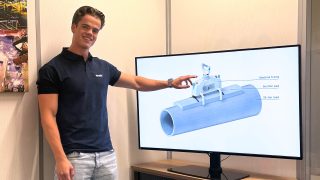
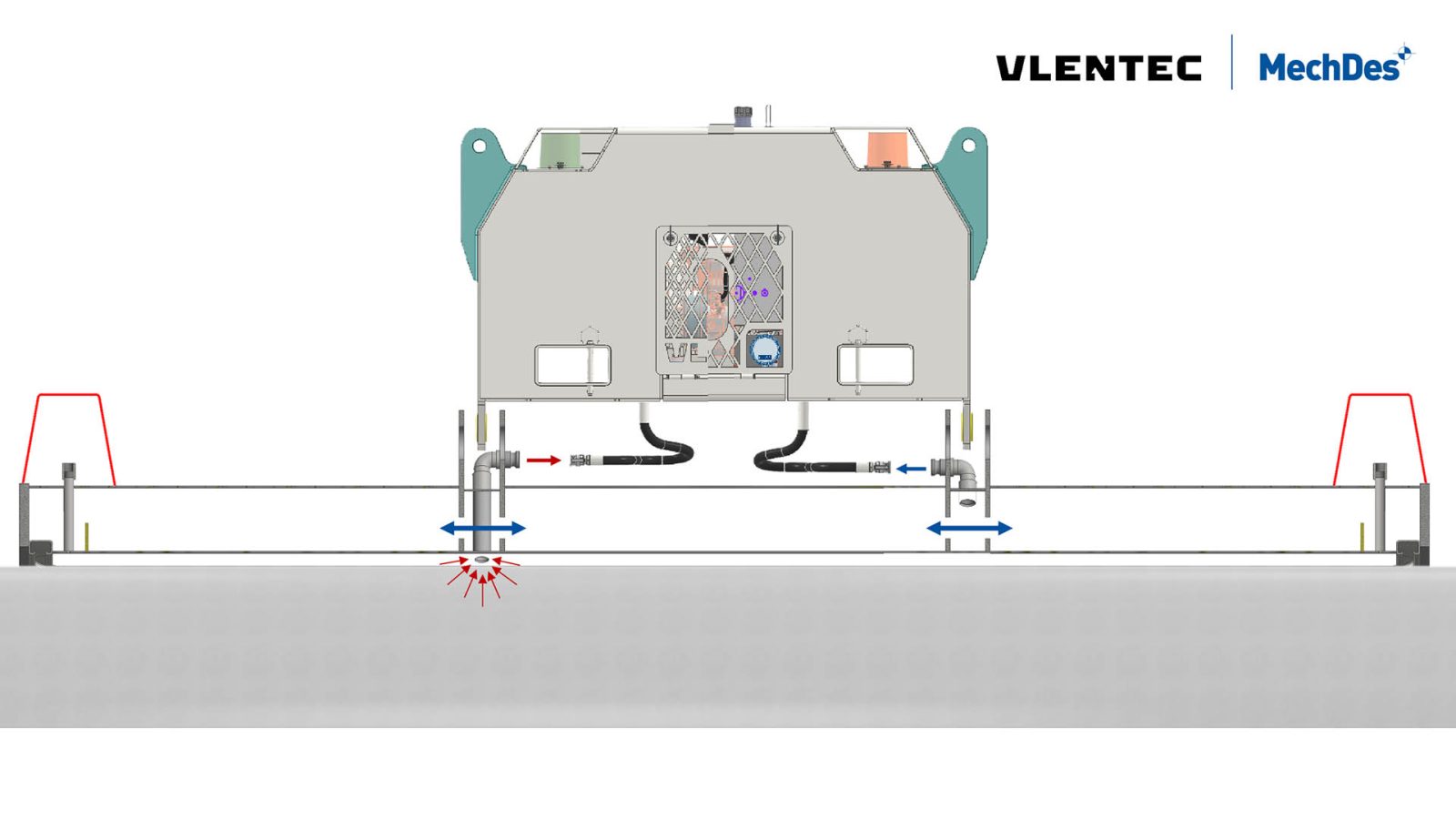
As part of the project for Vlentec International, I am developing a new suction cup for a vacuum lifter used to lift and position large pipes. The system is intended for onshore applications, where reliability and safety are critical. The foundation of the concept already existed, but this project focuses on making the design smarter, more compact and easier to manufacture.
The biggest change lies in the way the vacuum system is designed. In existing systems, the vacuum tank is typically mounted externally on the machine frame. In this new design, we are integrating the vacuum tank directly into the suction cup itself. At first glance, that may seem like a relatively small design change, but technically it has a significant impact. By integrating the vacuum tank, the solution becomes more compact and requires fewer external components. The system is easier to handle and can be deployed more easily as a modular solution. The idea is to create a more self-contained module rather than relying on one large, complete frame.
That makes the system easier for customers to apply. In addition, the design offers functional advantages. It creates additional vacuum volume within the system, which improves both safety and stability during operation.
For Vlentec, it is precisely this combination that is attractive: a solution that not only performs well technically, but also offers greater flexibility in deployment.
Designing for Offshore Conditions
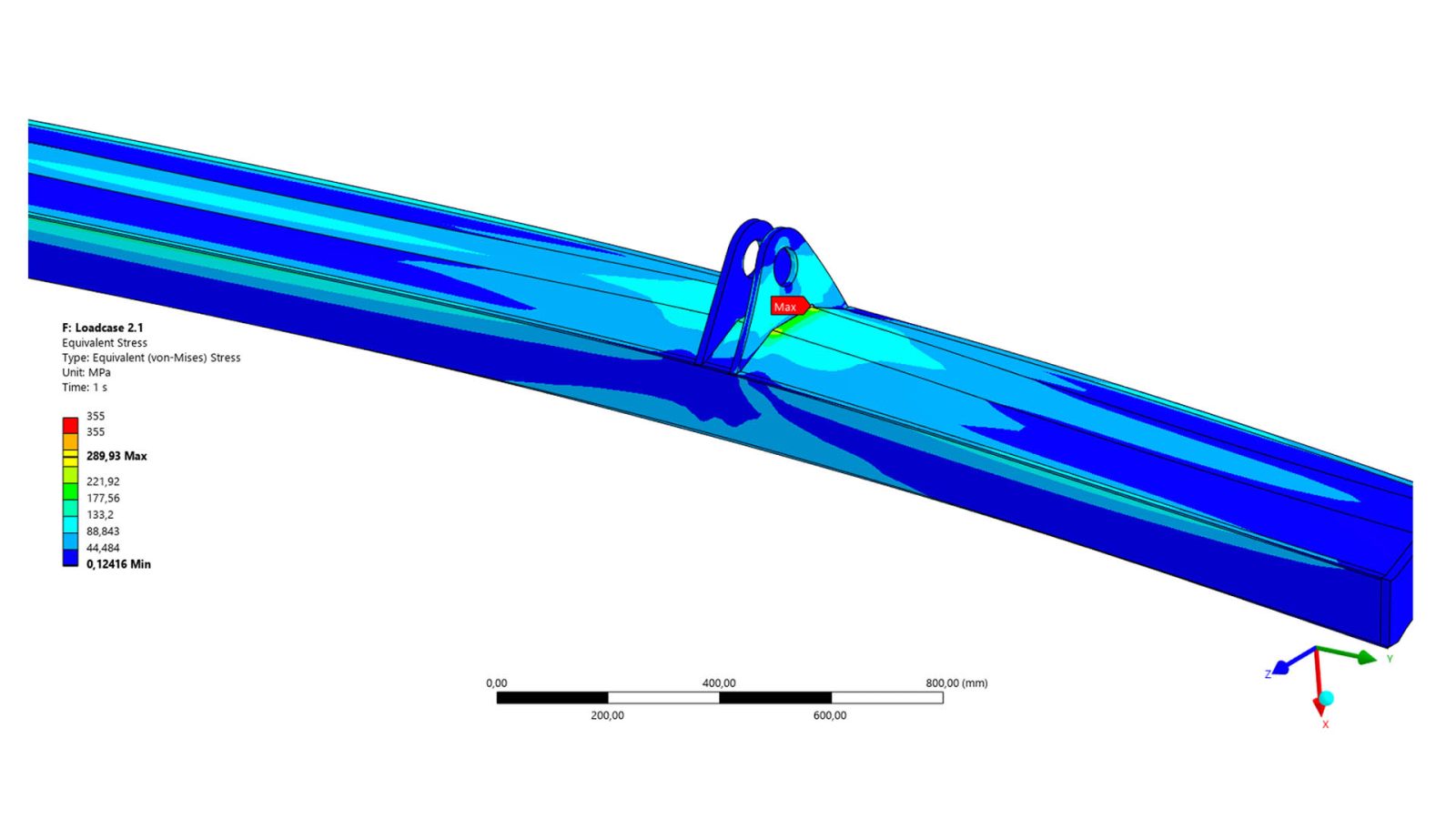
What makes this project even more challenging are the conditions in which the system will ultimately operate. The vacuum lifter is used outdoors every day and must therefore withstand heavy loads, changing conditions and long-term use. The system continuously builds up vacuum, releases it and then builds it up again. As a result, the material is subjected to constant cyclic loading. It is precisely these repeated load cycles that make fatigue a key consideration in the design.
At this stage, the primary focus is on designing a prototype and validating the concept. Ultimately, however, the goal is to create a system that will continue to operate reliably for ten to fifteen years. That is why structural loading, manufacturability and future fatigue analyses are already being considered at an early stage. The lessons learned from this prototype will be applied to the next version. That version will be further optimized and analyzed in greater detail. I enjoy that iterative process because it ensures that I continue learning and developing as an engineer.
Manufacturability Is a Major Part of Engineering
This project is not only about functionality or structural calculations. Manufacturability also plays a major role. The objective is not just to design something that works, but to create something that can also be manufactured efficiently. That is why we critically evaluate aspects such as welding, production time, component selection and assembly.
For example, we aim to reduce the number of complex welded structures and make the design easier to manufacture. This offers several advantages, not only in terms of cost and lead time, but also for international scaling.
Vlentec is actively exploring the possibility of manufacturing these systems outside the Netherlands as well. One of the project's objectives is to determine whether the same drawing package can be used for production anywhere in the world. That requires clear engineering. It is not just about creating a technically correct design, but also about considering how someone else will build it in the future.
The Engineer of Tomorrow
That is what makes working at MechDes not only educational, but above all incredibly motivating for me. The best part is seeing something you have designed actually being built. After spending months developing a design, you eventually get to see it performing in the real world under real operating conditions. It is precisely this combination of freedom, responsibility and collaboration with experienced colleagues that has enabled me to grow quickly as an engineer.