
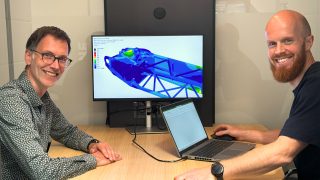
Introduction
In many offshore, infrastructure, and heavy machinery projects, everything starts with a strong idea and a solid concept. But as structures become larger, more critical, or more dynamic, the challenge changes as well. At that point, it is no longer just about shape and functionality. Strength, stiffness, stability, and fatigue become the determining factors. That is where structural engineering comes into play.
At MechDes, we do not see structural engineering as a final verification step, but as an integral part of the entire design process. From offshore equipment such as machines and cranes to truss structures, robot frames, and tooling, every design must not only function as intended but also demonstrably comply with real-world requirements and the engineering standards behind them.
And that is often where the real complexity begins.
From drafting to engineering validation
Where mechanical engineering projects were once often designed based on experience and generous safety margins, today's reality demands a far more refined approach. Structures need to be lighter, more efficient, and smarter, while at the same time meeting increasingly demanding requirements for safety, service life, and documentation.
For large structures in the offshore and infrastructure sectors, simply adding more steel to increase safety is no longer a viable solution. Mass has a direct impact on transportation, installation, dynamic behavior, loads, and overall costs. By performing structural calculations during the design phase, engineers can demonstrate that a structure complies with the required standards and load tests. These components are often too large and too expensive to rely on assumptions or to discover shortcomings only during physical testing. As a result, the focus has shifted from overdesigning to providing demonstrable engineering validation.
This fundamentally changes the role of engineering. It is no longer just about creating CAD models or drawings, but about understanding loads, stress distributions, stability, and fatigue behavior. Especially for large steel structures, this requires a different design philosophy. A structure must not only be strong enough when it enters service, but must also be demonstrably safe throughout its entire service life.
Structural engineering is therefore always a combination of calculation, interpretation, and experience. A finite element analysis (FEA) or a standards compliance check produces results, but it is the engineer who must understand what those results actually mean and which design decisions they support.
This is reflected in the projects we work on every day. For offshore structures, fatigue is often the primary challenge, with components subjected to long-term cyclic loading under continuously changing conditions. In heavy machinery, stiffness frequently plays a crucial role, for example in robot frames or production lines where accuracy directly determines functionality. Infrastructure projects, on the other hand, typically focus on safety, service life, and demonstrable reliability.
Everyone performs calculations, but specialization remains essential
At MechDes, structural engineering knowledge is widely embedded throughout the organization. Engineers are encouraged not only to create geometrically accurate designs, but also to validate them structurally. At a fundamental level, every engineer should be able to assess a design for strength and load-bearing capacity.
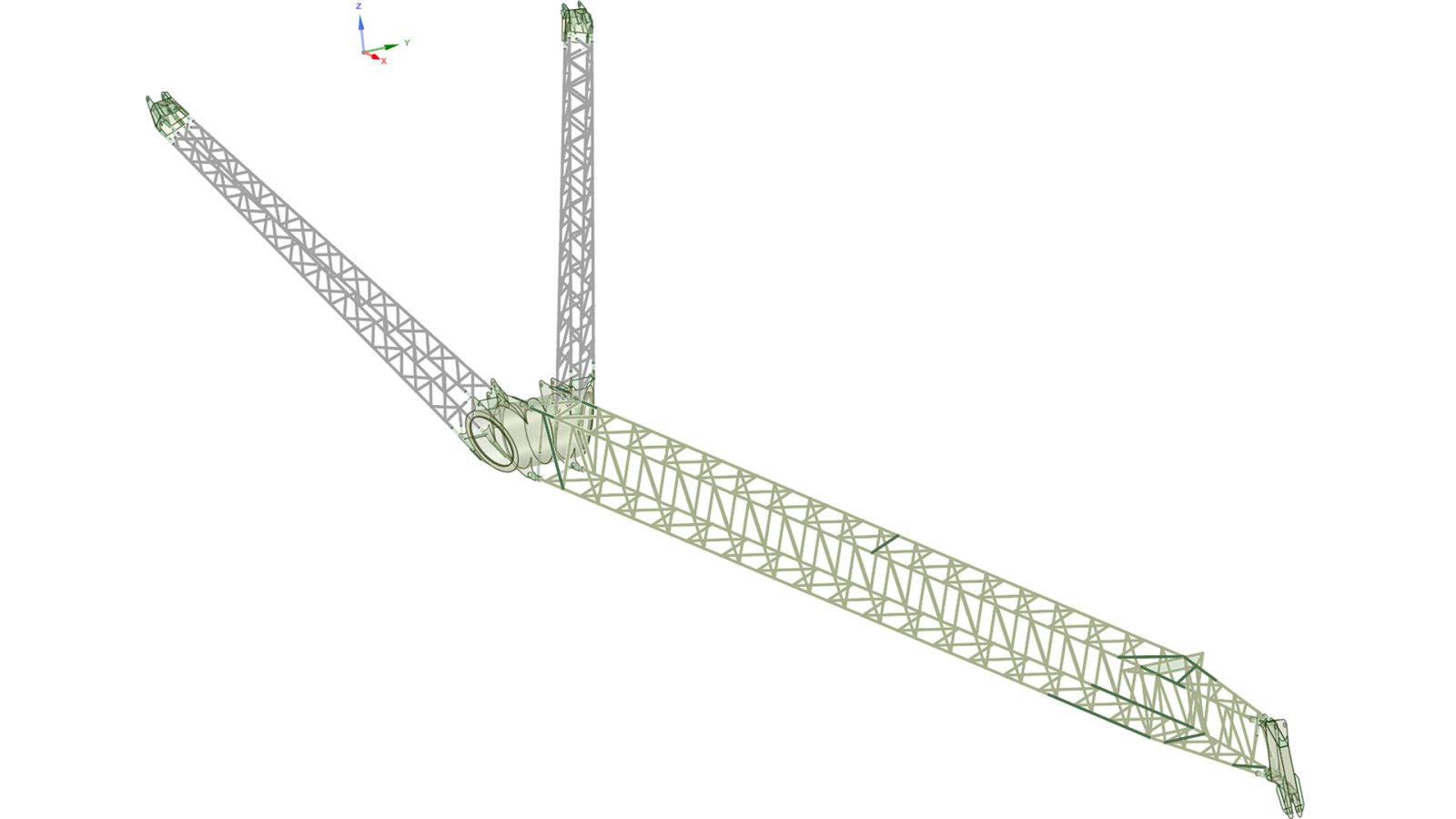
At the same time, there is a clear distinction in the level of specialization. As projects become more complex, require detailed assessments, or involve fatigue as a critical design factor, specialized structural engineering becomes essential. This difference is particularly evident in offshore structures, heavy lifting systems, and large truss structures. In these projects, it is not only strength and stability that matter, but also service life, dynamic loading, and localized stress concentrations.
While a static calculation verifies that a structure will not fail under today's loads, fatigue analysis evaluates how it will perform after ten, twenty, or even thirty years of service. Cyclic loading, weld details, connections, and stress concentrations all play a crucial role. This is where experience becomes invaluable. Engineering standards do not describe every situation in absolute black-and-white terms. In practice, engineers regularly need to combine multiple standards or determine how a specific detail can be justified within the intent of the applicable codes.
That is why, at MechDes, engineering standards are considered from the very beginning of a project rather than at the end. For larger projects, we always prepare a structural design brief together with the client, defining the design assumptions, load cases, safety philosophy, and applicable engineering standards.
This may include combinations of:
- Eurocode (EN 1990)
- ROK and VOBB guidelines
- Crane standards such as EN 13001, overhead crane standards, and offshore crane standards
- Offshore guidelines such as DNV, Bureau Veritas, and TÜV Nord
- Classification society requirements
- Fatigue standards
- Project-specific requirements
In practice, this means regularly working across multiple standards and regulatory frameworks. Especially in more complex projects, situations arise where not every scenario is explicitly covered by a single standard.
As a result, structural engineering is not merely a computational discipline, but also one of engineering judgment. Engineers must understand which standards best apply to a specific situation and how a design can be justified in a technically sound and compliant manner. It is precisely this combination of practical experience, standards expertise, and analytical insight that makes structural engineering a highly specialized field.
Large structures require smart engineering tools
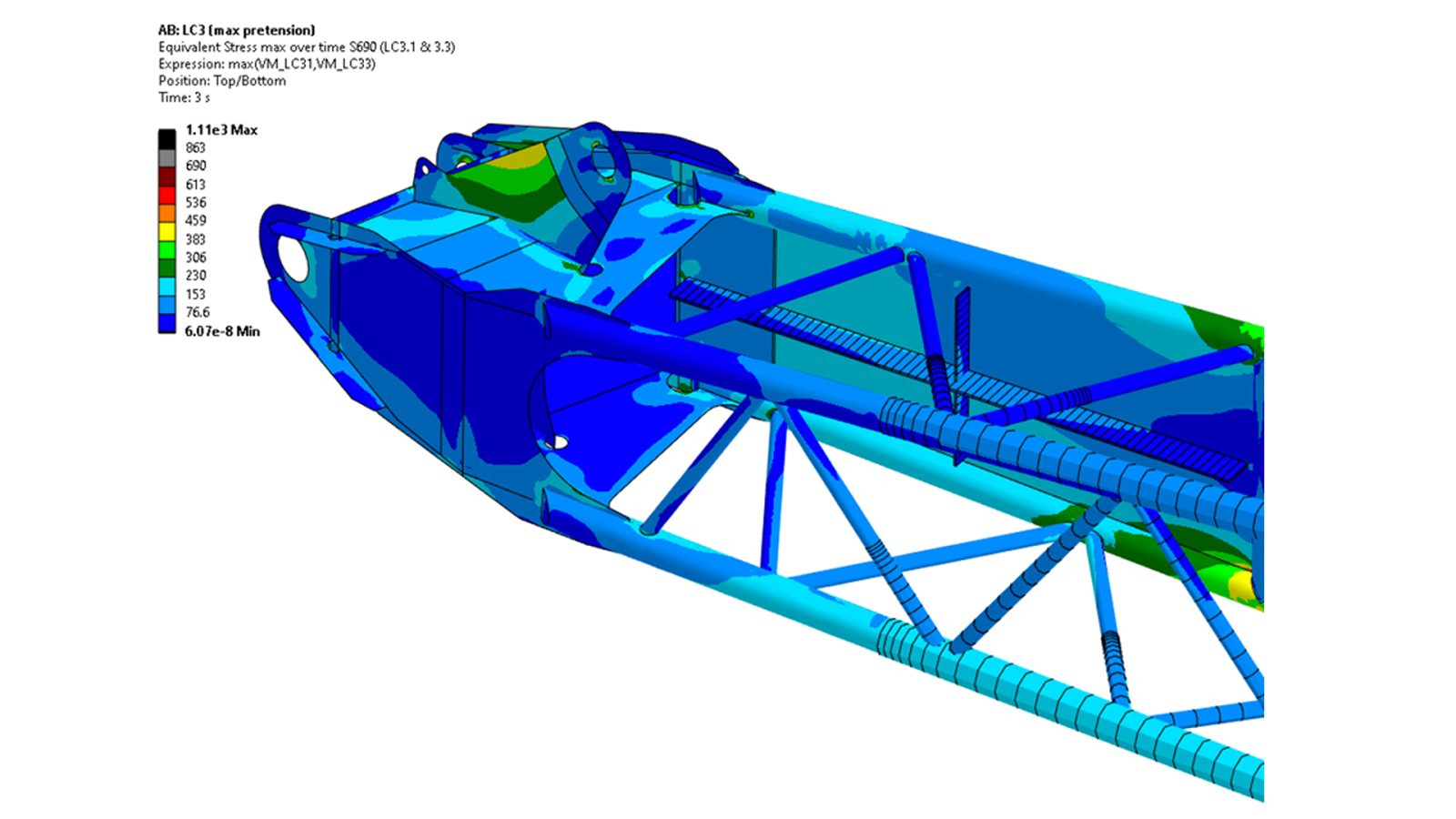
For large structures, advanced software becomes indispensable. Not to replace engineering expertise, but to make large volumes of calculations manageable, repeatable, and efficient.
At MechDes, Ansys and SDC Verifier play an important role in this process. In addition to Ansys Mechanical, we also work with Ansys Discovery, the successor to SpaceClaim. This software supports rapid geometry preparation and direct modeling, enabling our engineers to evaluate and refine design decisions at an early stage of the engineering process.
Many projects do not begin with a perfectly analysis-ready model. Instead, they often start with a concept from another CAD package, an initial design, or a customer-supplied model that first needs to be simplified and cleaned up before it is suitable for finite element analysis (FEA). Engineers can quickly modify geometry, simplify surfaces, remove holes, adjust thicknesses, or merge components without being constrained by a heavy history-based modeling approach. This makes design iterations significantly faster while keeping the workflow flexible.
At the same time, it remains important to distinguish between an analysis model and a final production model. A model that is optimized for FEA is not necessarily a fully detailed manufacturing model. This flexibility is one of the key strengths of the software during the early stages of engineering.
From thousands of connections to verifiable analyses
While Ansys primarily supports the front end of the engineering process, SDC Verifier plays a key role in verification and standards compliance. The software functions as an add-in within the FEA workflow and automates code checks based on forces, moments, geometry, and engineering standards. For large truss structures in particular, this results in significant time savings.
Some projects involve thousands of connections and hundreds of load cases. Performing those calculations manually would be virtually impossible. SDC Verifier enables engineers to systematically assess large numbers of nodes, hollow sections, and connections for strength, stability, and fatigue.
The software automatically applies the underlying equations based on the results from the FEA model. This allows engineers to iterate much faster and validate design decisions more efficiently. This is essential for large offshore structures and truss constructions, where loads are distributed throughout the entire structure and connections continuously influence one another. A modification in one area can directly affect stresses and forces elsewhere in the structure.
That is why rapid iteration is so important to us. When hundreds or even thousands of connections need to be reassessed, you do not want to manually enter equations or work through every exception individually. Even so, engineering expertise remains essential. Software does not determine the technically best solution on its own. It produces results, but interpreting those results remains the responsibility of the engineer.
When a connection fails to meet the requirements, the real engineering work often begins. The challenge is to determine where the problem originates and which design modification will actually resolve it. Should a profile be thicker? Wider? Should the geometry be changed? Is the issue caused by a local detail, a load combination, or the fatigue classification? Answering those questions requires a deep understanding of both the structure itself and the applicable engineering standards.
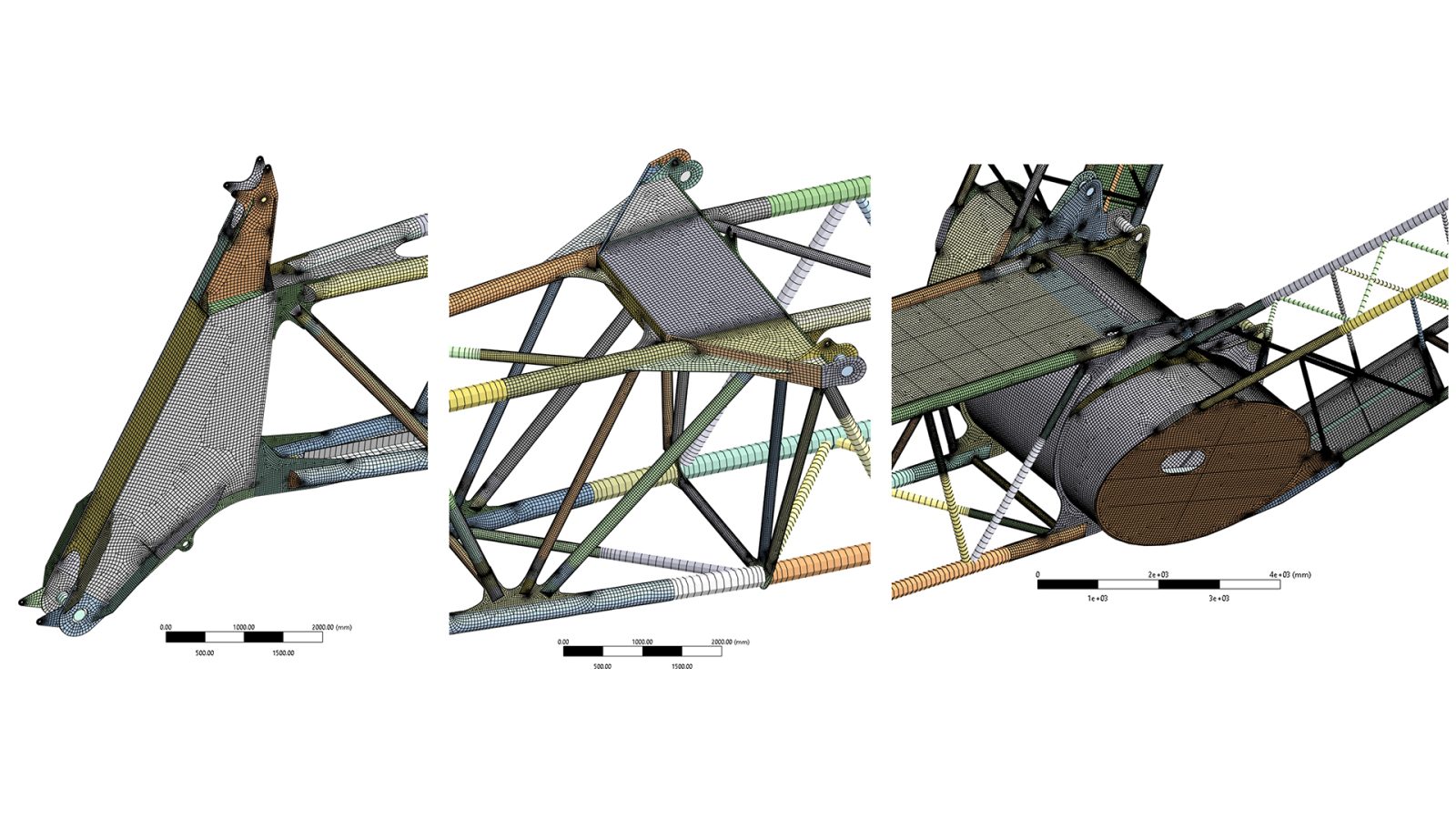
Smart software accelerates engineering, but it does not replace it
The development of modern engineering software has made structural engineering more accessible and more efficient. Many capabilities that previously required extensive scripting and programming, for example in Python, are now integrated directly into modern engineering workflows.
Even so, in-depth engineering knowledge remains essential. Especially for large structures with complex load paths, hundreds of load cases, and extensive standards verification, engineers must understand what is actually happening inside the model. FEA software is ultimately based on underlying assumptions, solver algorithms, and engineering interpretations. Whenever results are unexpected or models behave differently than anticipated, experience remains indispensable.
That is what distinguishes operating software from actually performing structural engineering. Much is being said within the engineering industry about AI, generative design, and increasing automation. Yet reality remains far more complex, particularly in structural engineering.
A structure must not only be theoretically optimal, but also manufacturable, inspectable, maintainable, and practical to build. In addition, engineering standards, deformation behavior, welded connections, and dynamic loading all have to be considered. For that reason, we see tools such as Ansys Mechanical, Ansys Discovery, and SDC Verifier as enhancements to engineering rather than replacements for it. They eliminate repetitive work and accelerate analyses, allowing engineers to spend more time on technical decision-making, design optimization, and engineering evaluation.
MechDes: 32 years of engineering experience as a foundation
With more than 32 years of engineering experience, MechDes knows that technology only delivers real value when it is combined with practical expertise. That experience is reflected not only in the use of advanced software, but above all in engineering judgment. Knowing where risks arise. Recognizing when results make engineering sense. Understanding how standards should be interpreted. And being able to move seamlessly between design, analysis, and real-world application.
This enables us to execute complex projects reliably and efficiently, from offshore structures and heavy lifting systems to heavy machinery and intralogistics solutions. Our strength does not lie in a single software package or a single engineering standard, but in the combination of mechanical engineering expertise, practical experience, and intelligent engineering tools. Because our engineers understand exactly what a model is showing, designs can be validated, optimized, and substantiated more quickly and with greater confidence.
For our clients, this means lower risk, better engineering decisions, and a design process where speed and quality go hand in hand. For MechDes, it means we can continue to take on technically demanding projects where reliability, safety, and engineering depth are critical.
Because ultimately, structural engineering is about far more than calculations. It is about understanding why a design works, and why it will continue to work throughout its service life.