

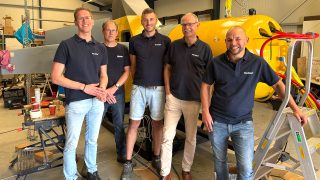
Introduction
Ocean currents provide an almost continuous source of energy, but flow too slowly for a conventional turbine. Equinox Ocean Turbines developed a two-stage turbine for this purpose. In co-creation, we designed the prototype, which performed exactly as calculated in open water.
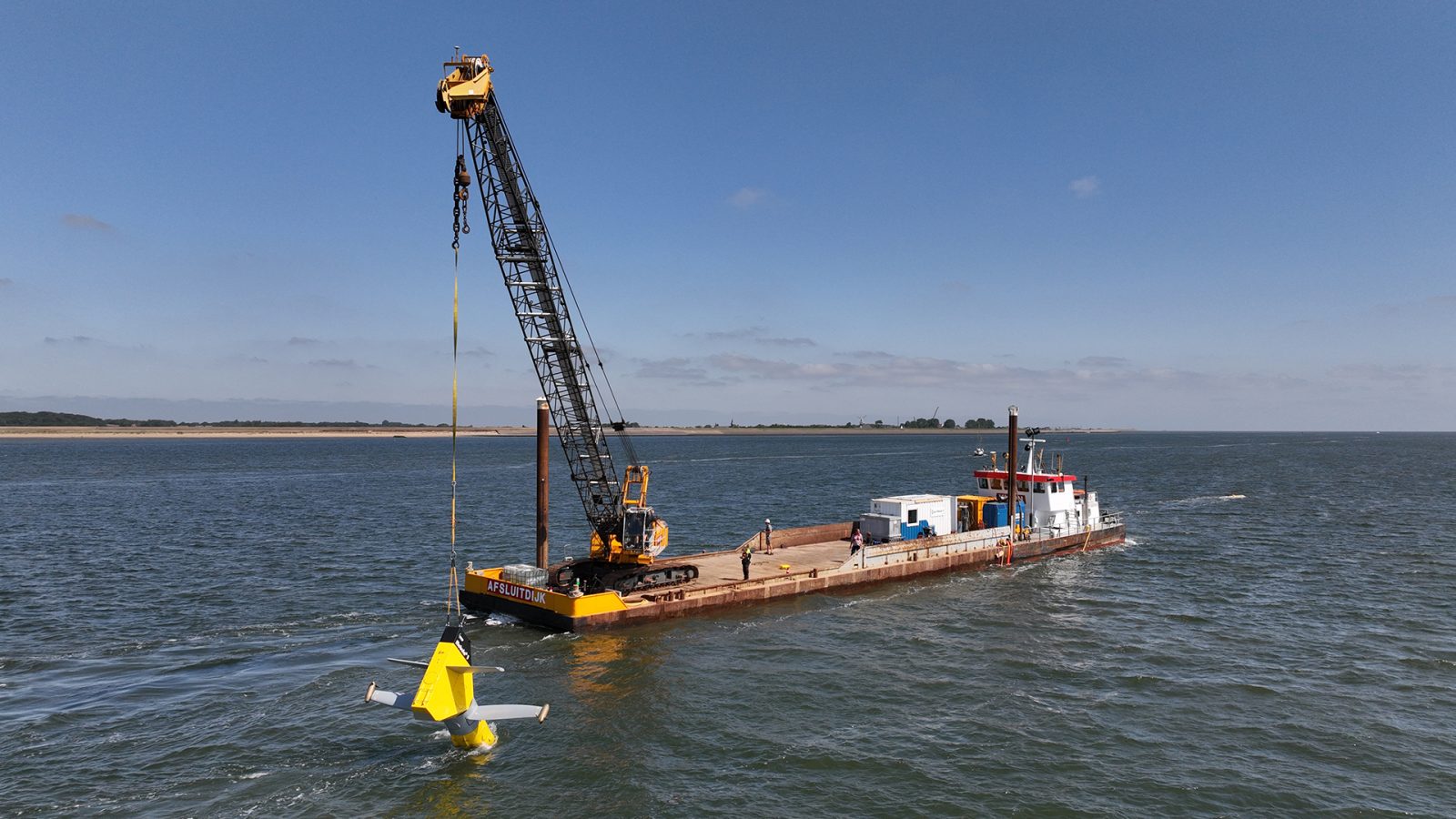
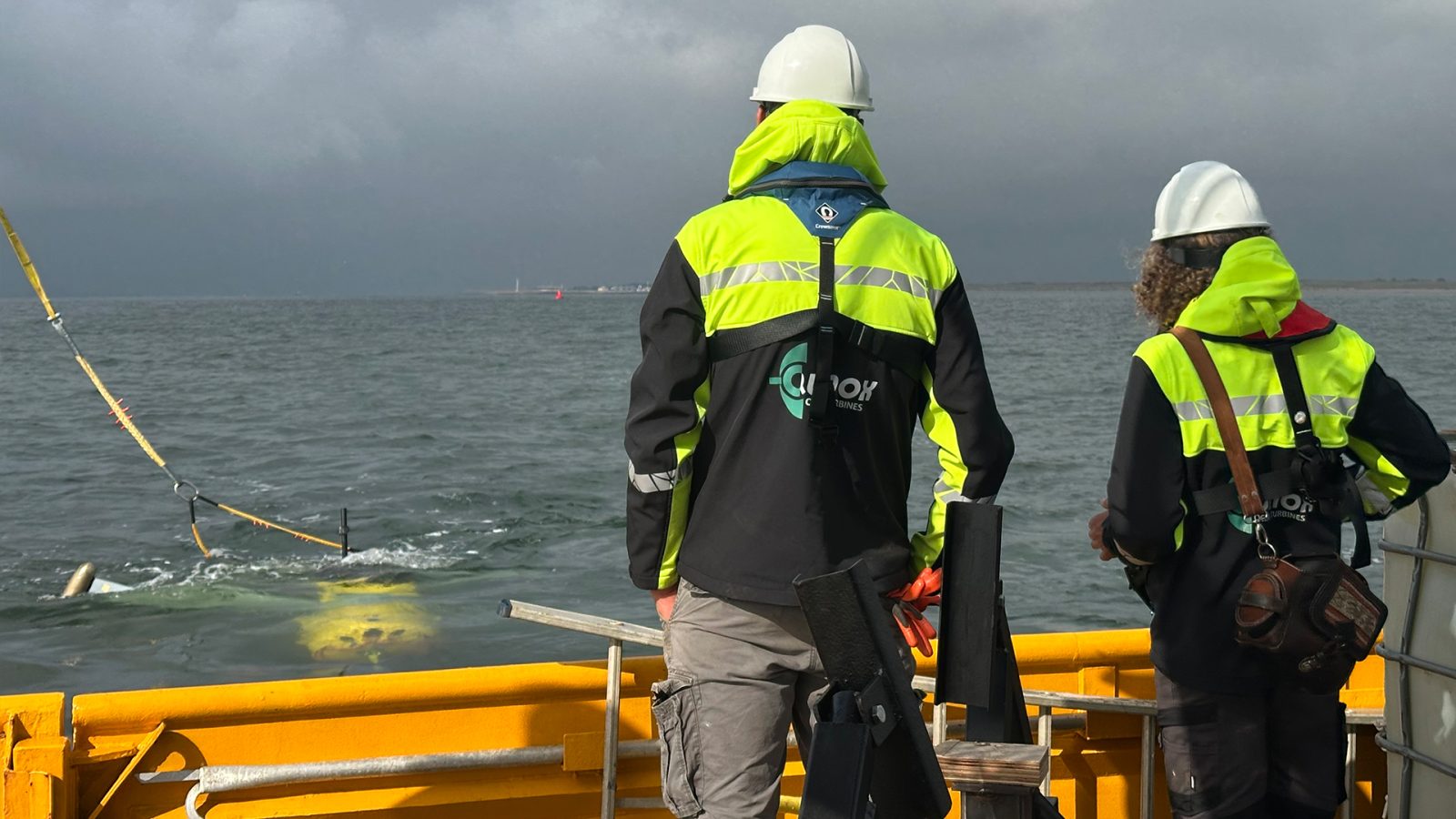
In July 2026, a 3.2-tonne turbine with a five-metre-diameter rotor was deployed in the Marsdiep near Texel. The Mobula® 5 submerged in a controlled manner, rotated, generated electricity, and was successfully returned to the water surface. With this test campaign, Equinox Ocean Turbines reached TRL 6. We carried out the mechanical and structural engineering for the prototype together with Equinox Ocean Turbines, from the mechanical design to strength calculations using FEM. Equinox Ocean Turbines then assembled the machine in their own workshop.
Equinox Ocean Turbines is developing a turbine for ocean currents: large-scale ocean currents that move more slowly than tidal currents but flow almost continuously. We spoke to founder Pieter de Haas about the business case, what a scale model teaches you, and the collaboration.
"Thanks to their enthusiasm for this remarkable project and the expertise of MechDes’ engineers, a very pleasant collaboration with Equinox has developed," says Pieter.
Get it right first, then make it better
Pieter has been working on energy from water for years. He previously built full-scale tidal turbines, including a 1.2-megawatt machine that operated in the Oosterscheldekering for eight years. In that sector, he saw plenty of technology that worked but had no future because the business case did not add up.
Ocean currents offer scale: the current is constant and predictable. The downside is the low flow speed. This is favourable for installation and loads, but unfavourable for a conventional turbine.
Equinox Ocean Turbines solves this with a two-stage turbine. A large, slowly rotating rotor drags two small turbines at the blade tips through the water. The tips move much faster than the current itself, allowing small, fast-rotating turbines to generate electricity.
"You see a lot of people polishing something until it shines, while the fundamentals are not in order. Better is the enemy of good. It first has to be right, and only then better," says Pieter. The name was chosen deliberately. The equinox is the moment in March and September when the sun crosses the equator — a turning point in nature. Equinox Ocean Turbines wants to be that turning point for ocean energy: from technically interesting to commercially viable.
The business case: constant current, proven technology
A turbine in an ocean current rotates almost all year round. In return, every machine must be affordable to build, install, and maintain. Equinox Ocean Turbines focuses on both.
- Yield: because the current is constant, Equinox calculates with an average capacity factor of 65 per cent.
- Scale: the full-scale Mobula® 50 delivers 2 megawatts. Eight to ten machines share one 33 kV cable over thirty kilometres, together generating around 20 megawatts. A full-scale park consists of fifty to one hundred turbines and approaches 200 megawatts.
- Locations: the currents are concentrated along the east coasts of continents. Equinox focuses on Florida, South Africa, and Japan. The machines are positioned at least fifty metres below the water surface.
- Production: complex components such as the tip turbines, main bearing housing, and electronics are sourced from the Netherlands, preferably from Friesland. Large concrete and steel components are manufactured and assembled locally.
- Maintenance: for servicing, the machine rises to the surface. Ordinary workboats with a standard toolkit are sufficient; no specialised vessels are required.
- Ecology: a marine biologist is part of the team and is involved in the design process. The impact of the turbines on the surrounding marine life is carefully assessed, including emissions from a turbine and potential risks introduced to underwater life.
Around the turbine as well, Equinox Ocean Turbines chooses proven solutions. The machine is suspended from a single-point mooring at the front, and the mooring line also carries electricity and data. A ballast system and trim flap allow the machine’s height in the current to be adjusted. The cabling follows the offshore wind approach: looping from turbine to turbine and then to shore.
"We do not want to reinvent every wheel," says Pieter. "We apply as much proven technology as possible, even if that is sometimes slightly suboptimal for us. In the end, this reduces risk and makes the solution cheaper and more robust."
Starting from the end goal
Equinox Ocean Turbines did not begin developing their concept with the prototype, but with a park of full-scale machines: eight to ten turbines per cable, potentially multiple cables and offshore hubs, similar to offshore wind.
From that end goal, Equinox Ocean Turbines parameterised the concept, initially in a simple spreadsheet. This is where you connect ideas and map out the entire playing field. Otherwise, it becomes loose sand. Only then can you direct the various disciplines in a targeted way.
The next question was which risks remained unknown. Pieter had already run a turbine for a long time and achieved a clean power curve. What was new was this machine’s behaviour: submerging, remaining stable at depth, and returning to the surface for maintenance. That became the main focus of the prototype test.
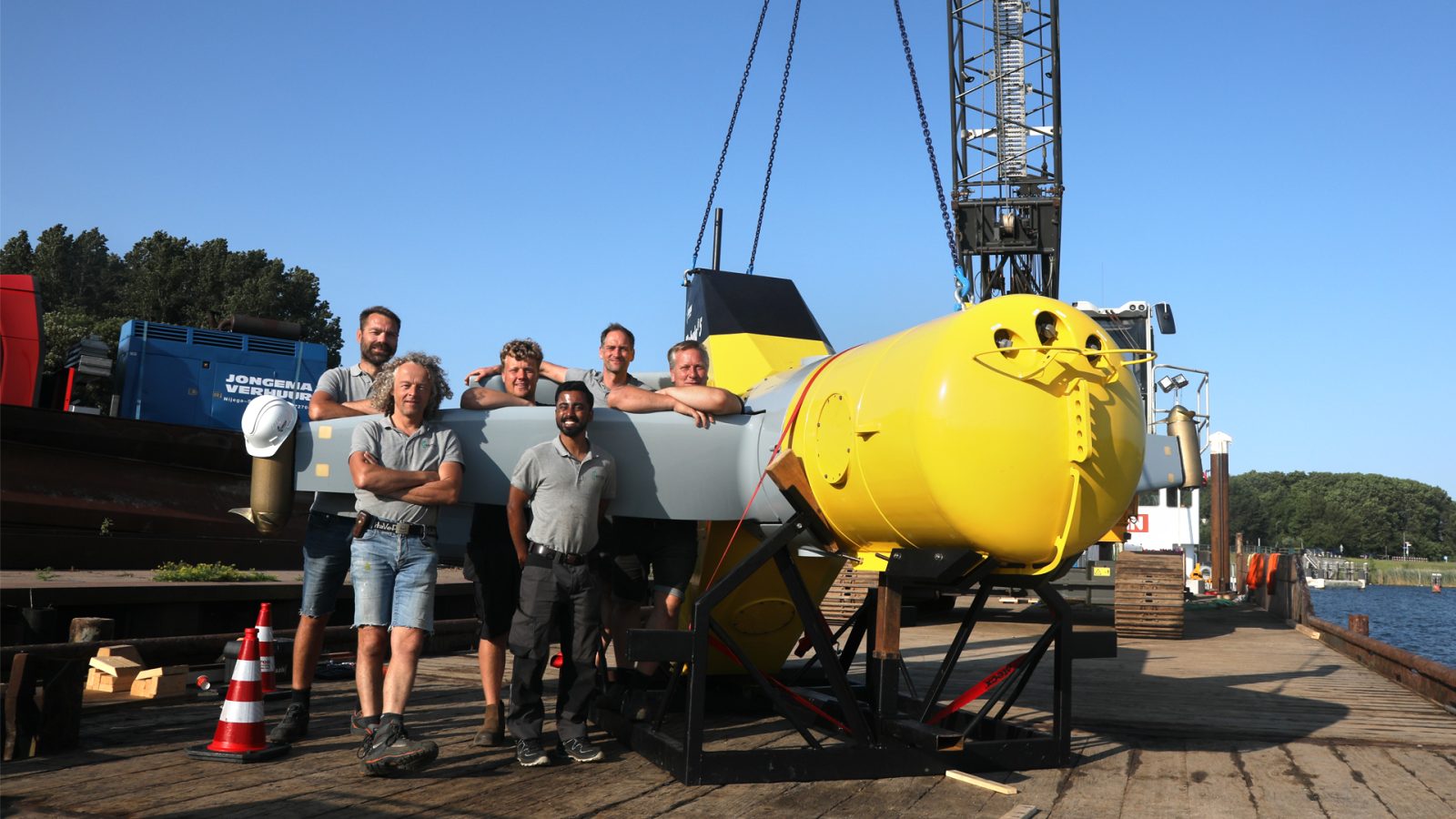
The scale followed from the same pragmatic assessment. A 3.5-metre rotor proved too small, because scale effects would then dominate. Five metres — a 1:10 scale — was the largest size that fitted within the budget. At that scale, the machine delivers 30 kW at a flow speed of 2.1 m/s, at an operating depth of ten metres. It also just fit inside Equinox Ocean Turbines’ workshop, where the prototype was built: when it was lifted out, only two centimetres remained below the hook.
Co-creation on a moving train
When our team of engineers joined the project, Equinox Ocean Turbines was already well advanced in developing the concept. Our first step was therefore a joint assessment. Which assumptions were fixed? Which decisions still needed substantiation? And how did the disciplines interact?
That required more than engineering capacity. We stepped into a concept that was still very much in development, as well as into the working method of the person who had conceived it. We caught up with a moving train and, together with Equinox Ocean Turbines, determined where adjustments were needed.
"While we were already running with the baton, you took it over while running and we started together. I found that start remarkably smooth, and it made the collaboration very enjoyable."
Critical without crushing ideas
MechDes’ design philosophy is Less is More: do not add anything that is unnecessary, unnecessarily expensive, or introduces extra complexity. "There is a very thin line between being critical and dismissing something. At many traditional engineering firms, you see: it is different, it is unusual, so it must be wrong. I did not experience that with you," says Pieter. What he did see was a team that asked critical questions about choices that deviated from the conventional approach.
That requires the right people on the right project. We work with more than a hundred engineers, and a concept in which much still needs to be discovered does not suit everyone. Pieter: "Put a creatively minded engineer on a finishing job involving a thousand drawings, and they will go crazy. The same applies the other way around. It is great that you know your own people so well and put together a team that truly fits the client."
"You are also willing to critically examine things that initially seem like ‘nonsense’ but were deliberately chosen that way, and to think along about them. You apply your experience outside your own comfort zone and look with curiosity: well, what is this exactly?" says Pieter. The same sharpness was evident in project management, according to Pieter: "The people we worked with were healthily critical and constructive. That is essential for this kind of technology development. I also appreciated the critical approach in project management: it was always made clear that the budget was not unlimited and that we needed to manage sharply."
What a scale model teaches you
A prototype exists to uncover surprises before they become expensive. The design started from a simple cylindrical shape: without a reason to choose otherwise, you select the cheapest and most robust option.
At prototype scale, things turned out differently. The full-scale machine may slow itself down due to its size once part of the rotor emerges above the water surface. The five-metre model does not. Together with Equinox Ocean Turbines, we therefore gave the prototype its own braking system and a modified rear section.
That was additional work, and it is precisely the kind of thing you encounter when building a prototype. Not everything may work as expected, or sometimes you identify further optimisations during the process. In that sense, we debugged the concept. Those lessons will be carried into future prototype projects.
Four millimetres
In the water, the Mobula® 5 remained within the predefined tolerances on every point. Our calculations and Equinox Ocean Turbines’ construction proved to align closely.
"We are very proud that it works and that it shows the behaviour we predicted. The centre of gravity was four millimetres off from the calculation. So both the builders and the calculators did a good job."
During trimming, eighty kilograms had to be moved on a total mass of 3.2 tonnes. This turned out to be caused by two load cells that were not properly calibrated — a matter of adjustment during the test. One flap jammed and had to be reamed out. "That is pretty cool too," says Pieter. "We did not have to do anything that was not anticipated."
From prototype to production machine
The next step is the Mobula® 25, planned for 2028. This will be followed by the full-scale Mobula® 50 in 2030. Equinox Ocean Turbines is currently raising funding for this.
That will be a true production machine. What was deliberately kept simple or omitted in the prototype will then be developed for production, maintenance, and years of operation. Pieter hopes to return to us soon for this, and earlier in the process than this time.
About this, Pieter says: "Being able to put the next concept on paper at an early stage with a small group of engineers, purely as a sounding board, is valuable. The foundation, conceptual design, and pre-design should be done with a slightly larger team, but in an advisory capacity. After that, we scale up strategically once it comes down to detailed engineering. The great thing about MechDes is that they can scale with us."
"MechDes knows what it is capable of and is willing to apply its expertise to other, new areas as well," says Pieter.
We look back on this project with pleasure. It was exciting at times, and at Equinox Ocean Turbines it required more than a few late nights in the workshop. They were worth it when the Mobula® 5 did in the water exactly what we had designed and calculated together.
About Equinox Ocean Turbines
Equinox Ocean Turbines was founded in 2020 by Pieter de Haas and develops turbines that generate electricity from ocean currents. The patented Mobula® is a two-stage turbine for relatively slow, constant currents such as the Gulf Stream, Kuroshio Current, and Agulhas Current. Following the open-water test with the Mobula® 5, the company is working towards the Mobula® 25 in 2028 and the full-scale, 2-megawatt Mobula® 50 in 2030. More information: equinoxoceanturbines.com.
About MechDes Engineering
MechDes Engineering is a specialised mechanical engineering firm in the Netherlands, active in mechanical and structural engineering for offshore, infrastructure, and machine building. With more than 30 years of experience and over a hundred engineers, we help organisations solve technical challenges. We translate ambitious ideas into robust, feasible solutions through consultancy, calculations and simulations, engineering, product development, and rapid prototyping.
Designing a concept or prototype with experienced engineers?
We would be happy to think along with you, even if your idea is still on paper. For more information, please contact Project Manager Dries Vis or Commercial Manager Rik de Muinck.
Sources